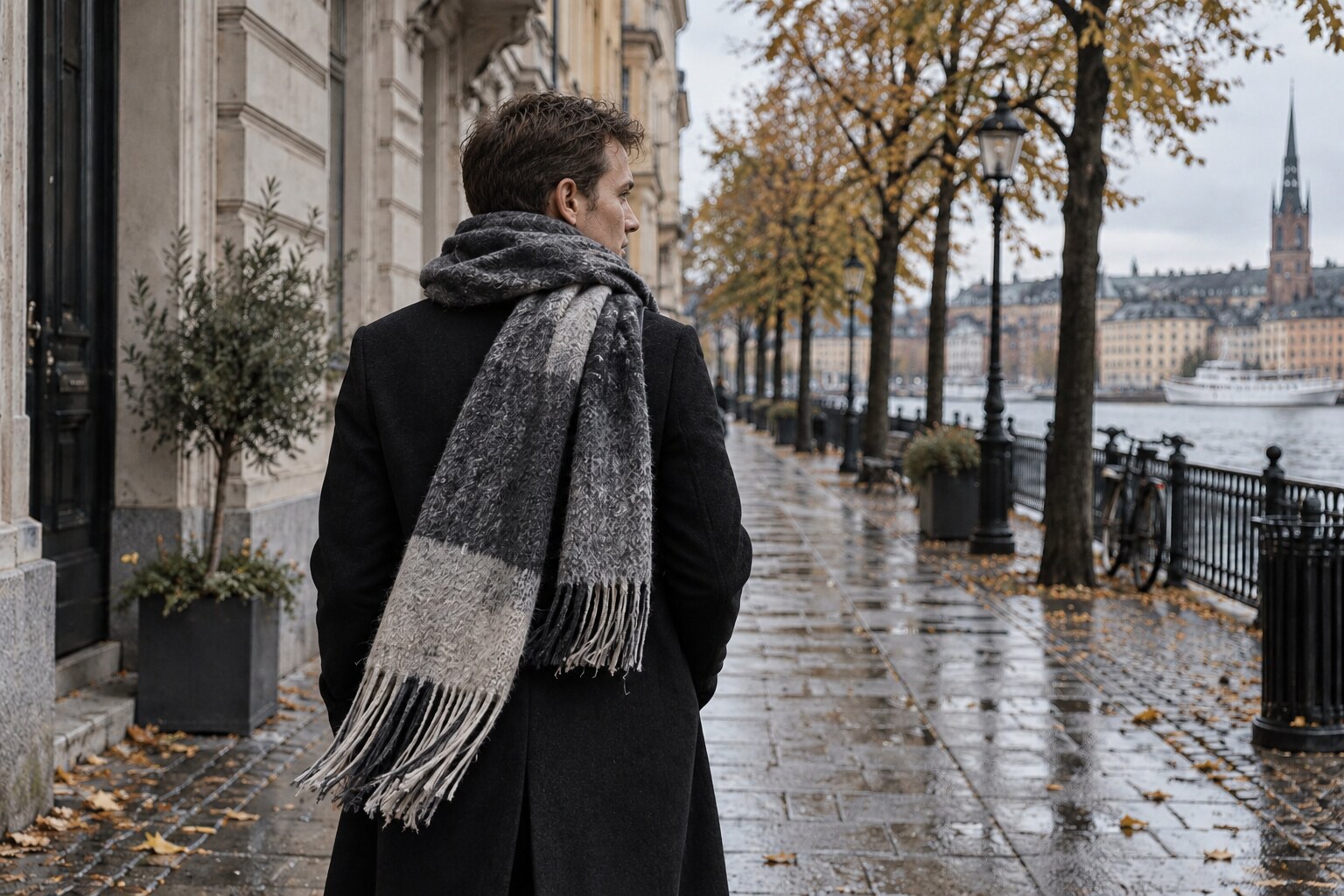
There is a point in autumn when a scarf stops feeling like an accessory and becomes part of leaving the house. It does the practical work of keeping out the cold, but it also changes the way a familiar coat looks, moves and feels. Few pieces offer so much without asking for much in return.
Warmth is only the beginning
In a climate that can shift between wind, rain and clear skies in the same day, a scarf earns its place through usefulness. It can be wrapped closely, worn loose or placed in a bag when the temperature changes. Its beauty begins with the fact that it works.
Texture changes the whole silhouette
A brushed wool, a compact knit or a lighter woven finish adds depth to even the simplest outerwear. Against the clean line of a coat, texture brings softness and movement without requiring colour, print or elaborate styling.
The same coat can feel different
A scarf can change proportion more easily than almost anything else in a wardrobe. Folded neatly, it feels precise. Worn long, it creates a vertical line. Wrapped generously, it adds volume around the face. One familiar coat can carry several moods through a single considered piece.
Materials reveal themselves through wear
The difference between fibres becomes clear over time. Good wool holds warmth, cashmere feels light against the skin and a silk scarf can move between seasons. The best choice is not always the most delicate or expensive one. It is the material that suits how often and where it will be worn.
The best ones become familiar
A scarf gradually becomes less about completing an outfit and more about belonging to a person. It is reached for without much thought, carried on journeys and remembered when it is left behind. Which scarf has already become part of how you move through the colder months?
Considered pieces chosen for changing weather, everyday use and the pleasure of wearing them often.