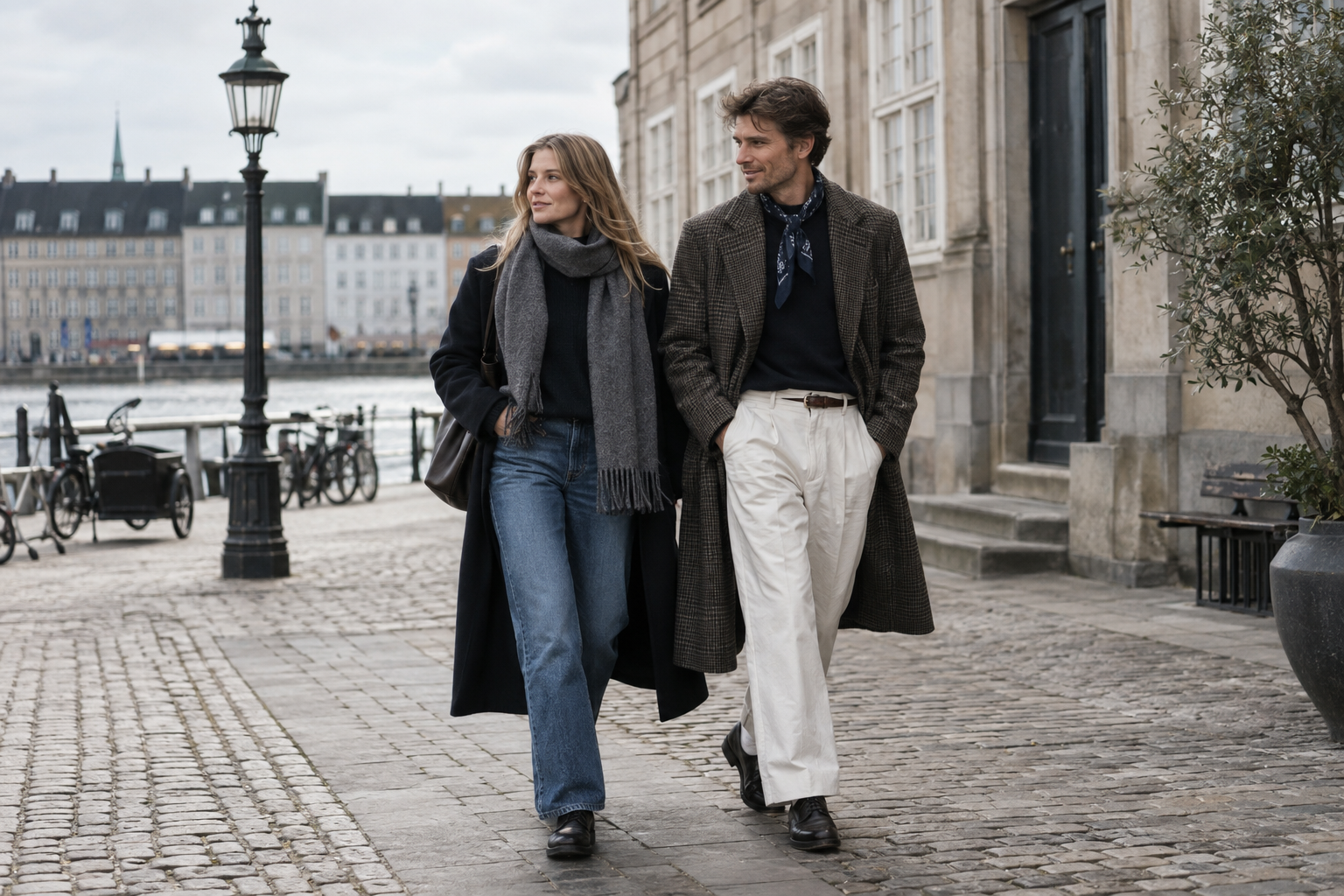
A familiar coat, an unexpected scarf, denim that has softened with use. An outfit can feel current without containing anything especially new. That possibility sits behind a question now being asked within Swedish fashion itself: could a smaller wardrobe produce a stronger sense of style? It is an intriguing proposition in a region whose clothes, designers and street-style images still travel so quickly around the world. But a change in the conversation is not yet proof of a change in everyone’s wardrobe.
A smaller wardrobe, a bigger question
On 1 September 2026, Stockholm Fashion District published a conversation with fashion journalist and stylist Frida Zetterström, recorded during Fashion Week Trade. Its title, “Mindre garderob, större stil”, asks whether fewer garments could mean more style. The accompanying introduction raises freedom from trends, function and the value of fashion as questions to explore. It is a useful starting point precisely because it does not announce that consumers have already changed. Inside a marketplace built around selling clothes, the relationship between having more and dressing well is being reconsidered. The interesting possibility is not simply a tidier rail. It is a wardrobe that feels more recognisably like its owner.
When newness starts to feel familiar
Micro-trends offer an efficient language for social media: a named aesthetic, a recognisable silhouette, something to save and search. Yet that efficiency can flatten the pleasure of discovery. By the time an item arrives, the feed may already be suggesting its replacement. This makes trend fatigue a plausible reading of the smaller-wardrobe conversation, rather than a measured condition shared by Scandinavia. Wanting more freedom from trends is also different from losing interest in fashion. A person can enjoy new collections while resisting the feeling that every new mood requires a purchase. The tension is between inspiration and obligation, between noticing something and feeling required to become it.
The fashion week that complicates everything
Copenhagen makes any declaration of a post-trend era difficult. In its 2025 review, Copenhagen Fashion Week described an August schedule of 50 brands and growing international media exposure. It also highlighted Cecilie Bahnsen’s tenth-anniversary archive runway show. That juxtaposition is revealing: a platform devoted to what comes next made room for looking back. Archive dressing can be compelling without being anti-fashion. Copenhagen’s influence remains commercial, visual and highly shareable, but its own programme suggests that relevance need not depend exclusively on the newest garment. The archive can become an event; an existing design can receive another reading. None of this proves that audiences are buying less. It does widen what counts as a fashionable moment.
Responsibility enters the picture
The city’s influence extends beyond silhouettes. Copenhagen Fashion Week’s 2025 review noted new partnerships with the British Fashion Council and Amsterdam Fashion Week around its Sustainability Requirements framework. The framework brings environmental and social considerations into access to the official programme, with external screening of submitted information. The organisation explicitly says this is neither certification nor an audit, and does not make participants inherently sustainable. That distinction matters. A better-materials collection is still a collection for sale. What has changed is the conversation around credibility: design leadership is being discussed alongside the conditions of production. Longevity may become part of fashion’s appeal without displacing its appetite for novelty.
Secondhand has more than one meaning
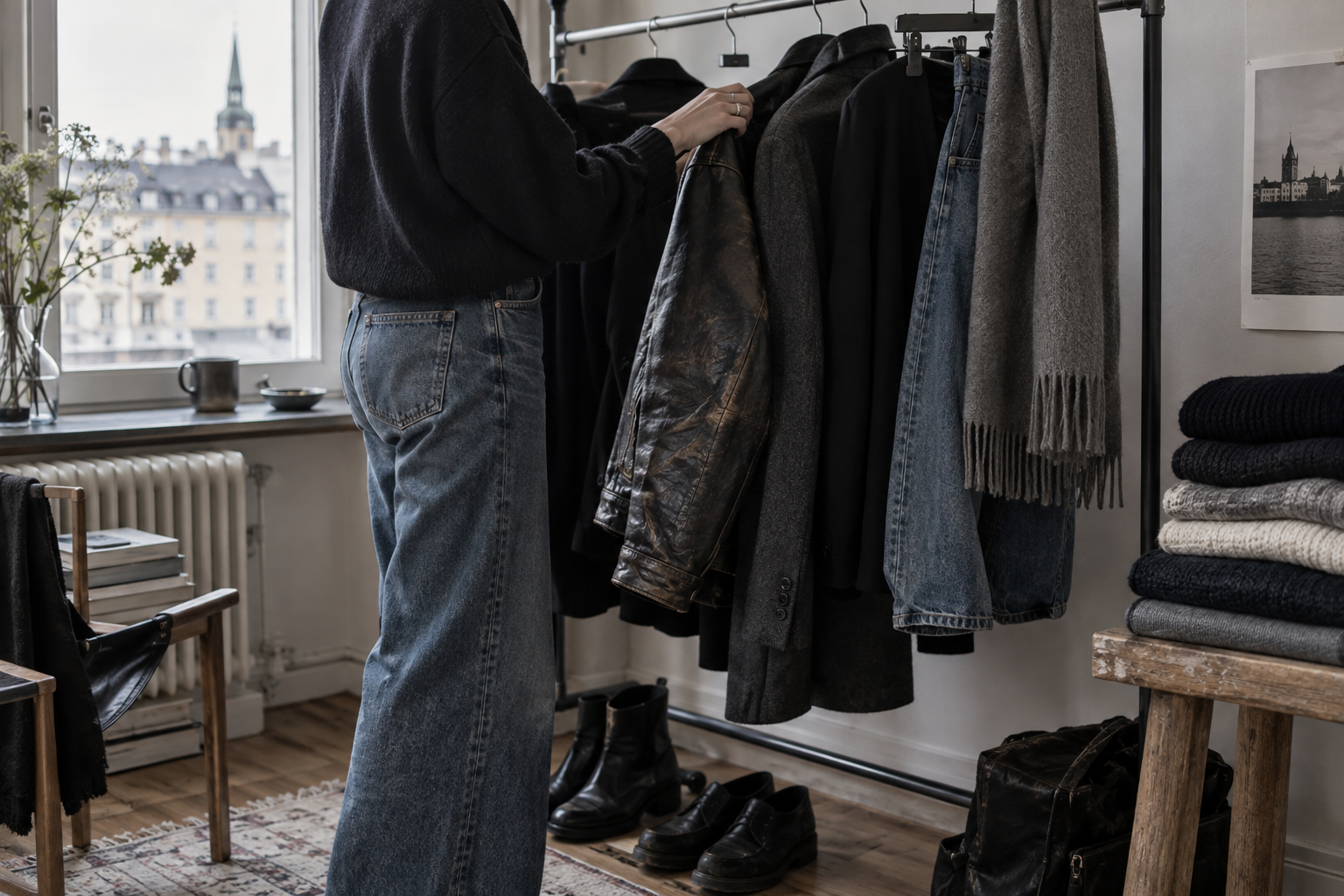
Vintage gives individuality a practical vocabulary: an unfamiliar label, an older proportion, a piece that is harder to duplicate. Stockholm’s Hornsgatan Slow Fashion District made that appeal visible well before this latest debate. TIME’s 2024 profile described a cluster of vintage and secondhand shops, alongside clothing rental and alteration services. But resale is not a simple upward story. Omni Ekonomi, reporting Svensk Handel’s figures, noted that Sweden’s overall secondhand turnover fell 13% in the first half of 2025 compared with a year earlier; fashion accounted for roughly a third of sales. Those are market revenues, not a count of garments or a measure of personal style. They complicate any confident claim that Sweden is steadily exchanging new fashion for old.
Are younger shoppers becoming more selective?
The evidence needs particular care here. The Guardian’s April 2026 coverage of ThredUp’s global resale report described younger generations as central to expected market growth, while also noting the influence of social media and AI-assisted discovery. That is global evidence, not a Nordic youth survey, and buying secondhand does not tell us how much someone buys overall. Baltic2Hand research, covering a Central Baltic region that includes Finland and Sweden, also identifies convenience and hygiene perceptions as obstacles to secondhand consumption. The appealing image of a young shopper patiently finding one perfect jacket is only one possible behaviour. The same platforms can make frequent wardrobe turnover easier. Selectiveness, thrift and a desire for novelty can occupy the same shopping basket.
Repetition becomes part of the signature
A smaller wardrobe changes the story only if its clothes are worn more, kept longer or replace purchases that would otherwise happen. Repeating an outfit is the ordinary, less photogenic part of that possibility. A familiar jacket can become a personal signature; repaired boots can matter because they already fit both the foot and the life around them. This is an interpretation of what wardrobe longevity could mean, rather than evidence that outfit repetition has suddenly become universal. Nor does longevity require an expensive investment piece. Function, repairability, comfort and attachment can explain why an inexpensive shirt survives while a costly coat remains untouched. The useful question shifts from how current a piece looks to why its owner keeps reaching for it.
Beyond a single Scandinavian look
Stockholm and Copenhagen are shaping different parts of this conversation without dividing neatly into serious minimalism and playful colour. Stockholm Fashion District provides a setting for questioning consumption; Copenhagen provides a highly visible stage for both new collections and archives. Its 2025 review places names such as Rave Review, Nicklas Skovgaard and Alectra Rothschild/Masculina within the same broader programme. There is little reason to expect that creative landscape to resolve into one uniform. Perhaps the more interesting evolution is a greater tolerance for incompatible tastes: restraint alongside drama, practical clothes alongside pieces chosen for pleasure. Individuality need not mean inventing an unprecedented look. It can mean choosing which influences deserve to stay.
What survives the trend?
So, are Scandinavians falling out of love with trends? There is not enough here to declare a regional withdrawal, or to say wardrobes are shrinking across the board. What is visible is a debate about value, a fashion industry negotiating responsibility, and several ways of making existing clothes desirable again. Even individuality can become a marketable aesthetic, another look to copy. Still, the smaller-wardrobe question leaves something worth considering. Perhaps Scandinavians are not abandoning trends entirely. They may be becoming more interested in a wardrobe, and an identity, that can survive them.
Sources
- Stockholm Fashion District — Mindre garderob, större stil (1 September 2026)
- Copenhagen Fashion Week — 2025: Year in Review (22 December 2025)
- Copenhagen Fashion Week — Sustainability Requirements Framework
- Omni Ekonomi — Swedish secondhand spending, first half of 2025 (Svensk Handel data)
- The Guardian — Secondhand clothing and the 2026 resale report (2 April 2026)
- Baltic2Hand / Turku University of Applied Sciences — Consumer research and publications
- TIME — Hornsgatan Slow Fashion District (25 July 2024; background)
Clothing and accessories chosen for repeat wear, personal detail and the kind of usefulness that does not expire quickly.