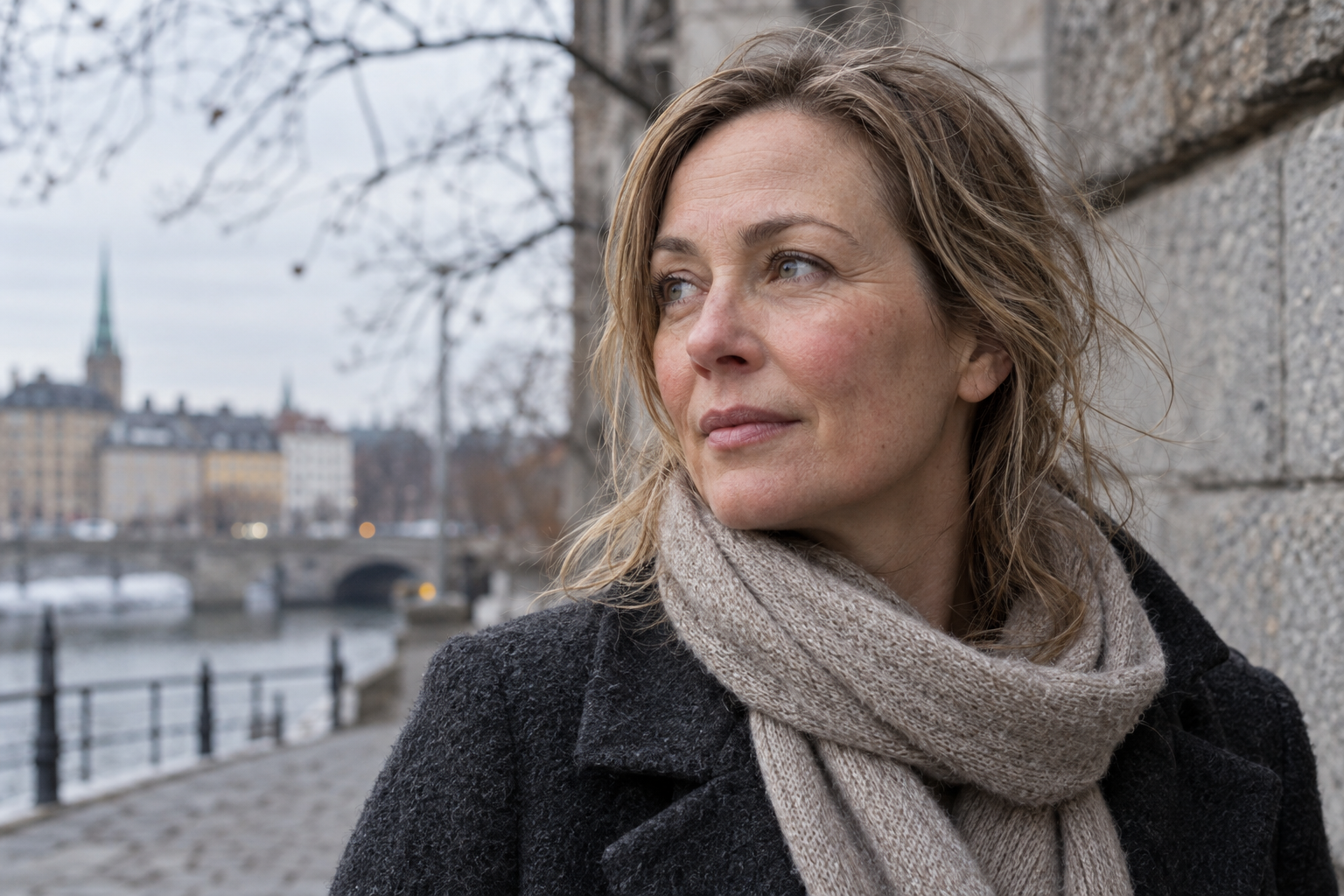
A wool scarf pulled higher, pale afternoon light, the first cold air against your cheeks. Winter has a convincing visual language of freshness. It is easy to turn that feeling into a beauty theory: perhaps people in colder countries stay younger for longer. Yet the evidence does not establish that living in a cold climate keeps human skin younger. The more useful story is about what winter changes, what sunlight does over time, and how to care for the skin you have.
The temperature is only part of the picture
The American Academy of Dermatology distinguishes natural ageing, influenced by our genes, from premature changes associated with environmental exposures and lifestyle. Sun exposure and smoking are among the factors it highlights. Looking at someone’s face cannot tell us which of these influences shaped it, and a country’s climate cannot stand in for an individual history. A photograph of a person in Stockholm is not evidence of a protective effect from winter. We can appreciate a Nordic setting without assigning it a biological advantage.
Cold weather is not the same as less sun damage
The AAD identifies sunlight as a major contributor to premature skin ageing. Reducing harmful ultraviolet exposure addresses that risk, but low air temperature is not a measure of someone’s lifetime UV exposure. Where you spend time, how you protect your skin and your habits across the seasons all belong in the picture. Winter also does not remove the need for sun protection. The AAD recommends protective clothing and shade, alongside a broad-spectrum, water-resistant sunscreen of SPF 30 or higher on exposed skin. Follow the product’s application and reapplication directions.
What winter can do to the skin barrier
Cold outdoor air, dry indoor air and heating can disrupt the skin’s protective barrier, according to the AAD’s winter guidance. Dryness and itching can follow, particularly for people already managing conditions such as eczema. That makes comfort a better immediate goal than chasing a supposed cold-weather glow. Pay attention to how your skin feels when you wash it, come indoors or go to bed. A face that feels tight or uncomfortable is asking for attention, even when it looks perfectly at home in a beautiful winter photograph.
What about the research on cold and longevity?
There is real laboratory research behind some of the headlines, but it asks a different question. A 2023 study in Nature Aging investigated cold-related lifespan effects in the worm C. elegans and protein-clearance mechanisms in worms and cultured human cells. Human cells in a laboratory are not people living through a Nordic winter. The study did not demonstrate fewer wrinkles, slower skin ageing or longer human lives from living in a cold country. It is an interesting research direction, not a reason to seek extra cold exposure as a beauty treatment.
A winter routine with a clear purpose
For dry skin, the AAD recommends gentle, fragrance-free products, short baths or showers with warm water, and moisturiser applied while skin is still damp. A cream or ointment may be more useful than a light lotion when dryness becomes a problem. Gloves help protect hands from cold, dry air, while lip balm or petroleum jelly can help dry lips. Think of these as ways to support comfort and retain moisture. They do not require a complicated shelf of products or a promise to turn back time.
Notice irritation before adding another product
It can be tempting to respond to winter skin by adding several new products at once. Our preference is to begin with what you actually need and what your skin tolerates. If dryness persists despite basic care, or products cause burning or irritation, seek advice from a dermatologist. A prescribed routine may need individual adjustments; discuss those with your clinician. The season is a useful prompt to review your habits, rather than an instruction to replace everything in the bathroom.
Enjoy the season without asking it to stop time
There is plenty to enjoy in a winter day: the weight of a coat, a walk that ends somewhere warm, the changing colour of the afternoon. None of it needs to be an anti-ageing intervention to be worthwhile. At Nordic Way My Way, we would rather take the season as a reason to pay attention. Protect your skin, make room for comfort and let a face have its own history. The cold can change the day. It does not have to promise a younger version of you.
Sources
- American Academy of Dermatology: natural and premature skin ageing
- American Academy of Dermatology: winter skin and sun protection
- American Academy of Dermatology: relieving dry skin (updated 2 January 2026)
- Lee and colleagues, Nature Aging (2023): cold temperature, longevity and protein clearance in laboratory models
Sources reviewed on 16 October 2026. This article provides general information, not personalised medical advice. AI-generated editorial portrait; it is not evidence of a skincare or anti-ageing result.
Explore our beauty edit, with attention to useful routines and the details of daily life.