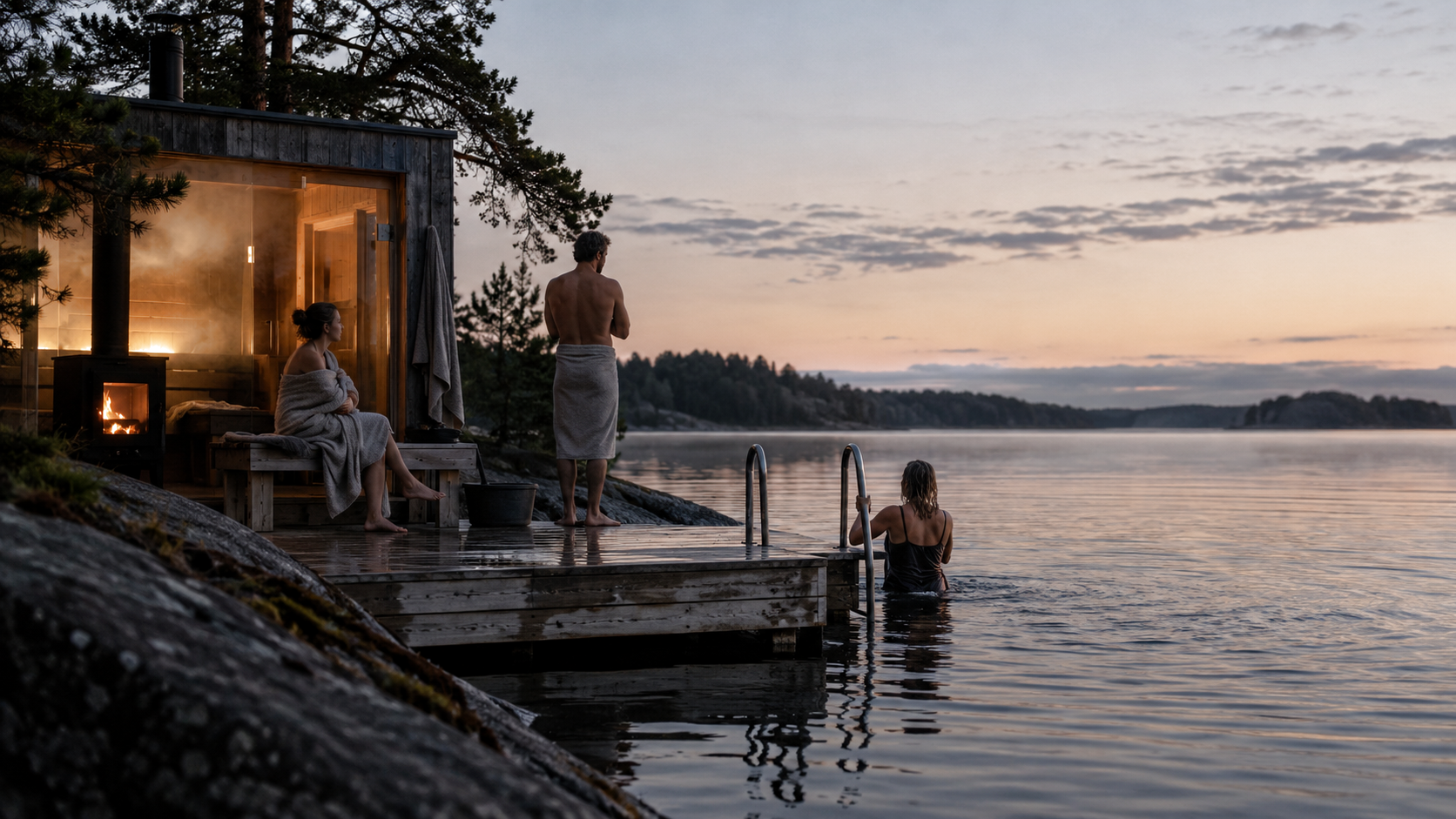
Some of the most desirable purchases now disappear almost as soon as they happen. A dinner is eaten. A concert ends. The heat of the sauna leaves the skin. A weekend by the water becomes a few photographs, a looser nervous system and the memory of not having to be anywhere else. The object is not the point. The point is the time, the access, the feeling of having briefly arranged life around something other than accumulation.
The Things We Cannot Keep
The question is not whether Nordic people have stopped wanting beautiful things. They have not. The Nordics remain affluent consumer societies with strong fashion, furniture, beauty, jewellery and design cultures. A well-cut coat, a lamp with a long life and a chair with provenance still carry status here. But the cultural temperature around luxury seems to be shifting. What if the ultimate Nordic status symbol is no longer something you own, but something you had enough time, money and freedom to experience?
When Choice Becomes Luxury
The Nordic Women Report 2025, published by Aller Media Nordics, offers a useful signal rather than a total definition of the region. Aller describes the report as a Nordic insights study based on conversations and data from women in Sweden, Norway, Denmark and Finland. In the report's consumer-priority findings, travel and experiences were the preferred way to spend money among 70% of the Nordic women surveyed, compared with 21% for fashion and shopping. Read carefully, the number is not an obituary for material desire. It is a hint that discretionary spending is increasingly being judged by the life it makes possible. The purchase is not only what arrives in the home. It is what changes the day.
A Nordic Shift, Not One Nordic Answer
The same report suggests subtle differences between countries, and they are best treated as cultural clues, not national personality tests. Denmark leans toward escape and experiences; Norway shows a strong preference for travel; Sweden appears more balanced between travel and everyday pleasures such as food; Finland gives more weight to food and ordinary comfort. Those patterns sit neatly beside things already visible across the region: the Copenhagen long weekend, the Norwegian cabin trip, the Swedish restaurant table, the Finnish sauna and meal after work. None of these belongs exclusively to one country. But together they suggest that experiential luxury in the Nordics often starts close to daily life rather than above it.
The Luxury of Leaving
Leaving does not always mean going far. It might mean a train to the coast, a cabin weekend, a night in a carefully designed hotel, an archipelago ferry, a forest path or a city break short enough to fit between obligations. Nordic tourism boards increasingly sell nature, design, food and culture as linked experiences rather than separate attractions. Visit Sweden's recent health-oriented tourism language, including its 'Swedish Prescription' campaign, is a telling example of how clean air, walking, cultural visits and access to nature can be framed as restorative assets. The appeal is not simply scenery. It is the temporary redistribution of attention: fewer notifications, more weather, a different horizon.
Wellness Without the Marble Lobby
Nordic wellbeing often looks plain from the outside: heat, cold water, forest, silence, wool, coffee, a bench, a view. Yet plainness can become premium when the thing it offers is scarce. Finland's sauna culture is listed by UNESCO as intangible cultural heritage, and public and private saunas continue to evolve from everyday ritual into design-led hospitality, from lakeside retreats to urban bathing houses. Cold-water culture has followed a similar path. A swim ladder and a wooden platform can now hold the same promise as a spa corridor: a controlled encounter with discomfort, then warmth, then quiet. The more connected life becomes, the more marketable disconnection becomes.
The Table Matters More Than the Object
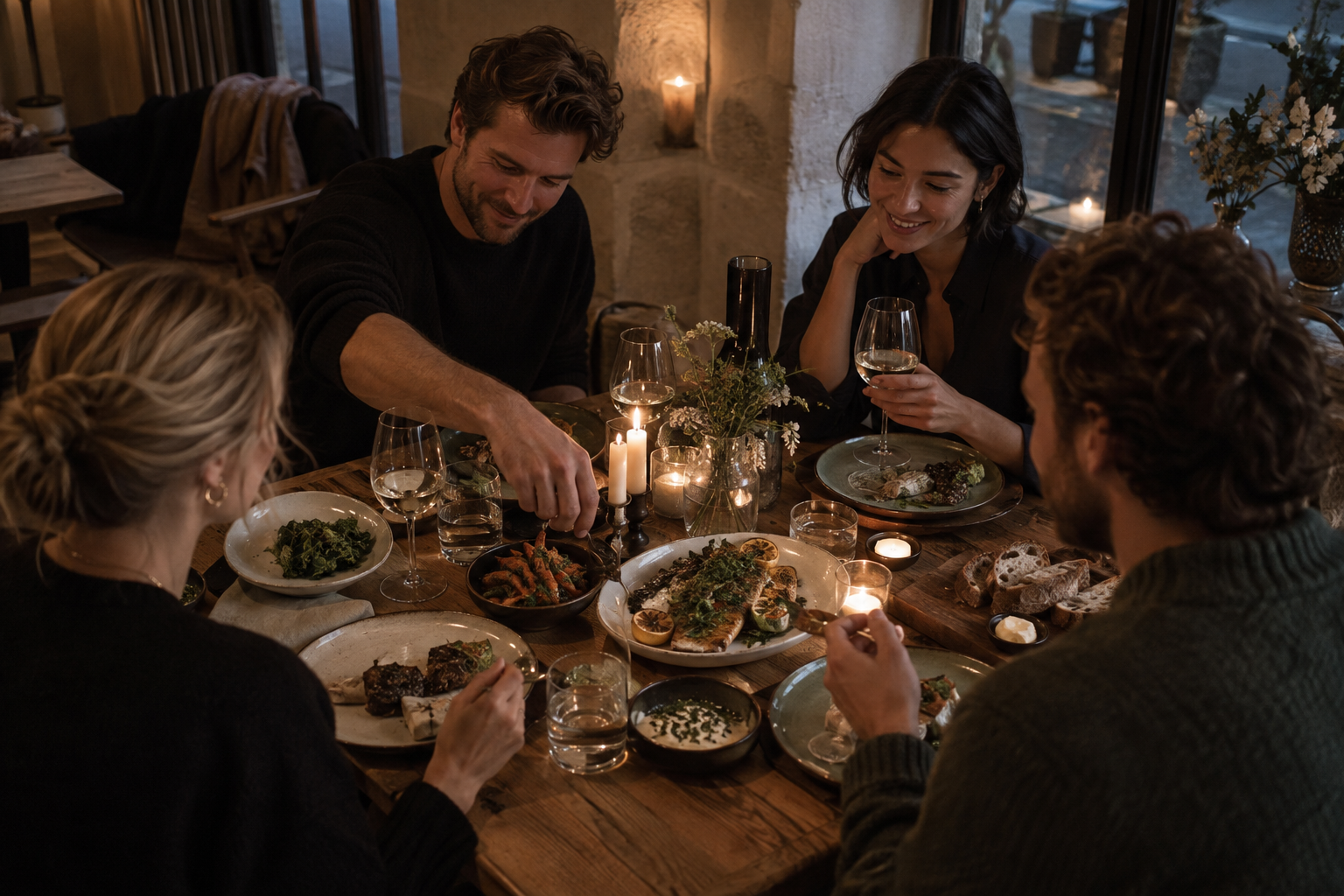
Restaurants make the shift especially visible because they sit between necessity, culture and theatre. The Nordic Council has described the rise of gastronomic tourism in the region, noting Denmark's long-running effort to connect food, place and visitors through Gastro 2025. The Michelin Guide Nordic Countries 2025 recommended hundreds of restaurants across the region, with Copenhagen, Stockholm, Oslo and Helsinki all functioning as culinary capitals in different registers. But the luxury of eating out is not only the reservation. It is the chosen evening: the table held for two hours, the friends gathered, the chef's idea of season and place, the small social permission to stop optimizing and taste something together.
But Experiences Can Be Status Symbols Too
This is where the romance needs interruption. Experiences do not automatically make consumption more meaningful, less wasteful or less status-driven. A remote hotel, a destination restaurant, a private sauna slot, a wellness retreat or a concert ticket can communicate taste and access as clearly as a handbag or watch. Once photographed, geotagged and circulated, the experience becomes visible property: proof that one was there, that one knew where to go, that one could afford the time. Social media has made this especially complicated. The most private-looking moments can become public language very quickly, and a quiet cabin morning may be styled as carefully as a product launch. Bain and Altagamma's 2025 luxury research describes a global move toward experiences, wellness, connection and fine dining, but it also shows that this is still luxury spending. The signal has changed shape; it has not disappeared.
What We Choose to Remember
Still, there is something culturally interesting in the Nordic expression of this global shift. It often makes luxury look less like excess and more like control over rhythm. A slow morning, a cabin by water, a concert, a museum afternoon, a sauna followed by cold air, a beautifully prepared dinner, a hobby with time around it: these are not possessions, but they are not nothing. They ask for resources, planning and access, and sometimes for the confidence to protect a few hours from being monetized, optimized or explained. Perhaps that is why they feel so desirable now. The rare thing is not the absence of objects. It is the ability to decide what deserves a place in the calendar, the body and the memory. Scandinavians may not be falling out of love with things. They may be asking whether the most valuable things are the ones a wardrobe, shelf or jewellery box can never quite hold.
Sources
- Aller Media Nordics - The Nordic Women Report 2025
- Bain & Company and Altagamma - Luxury market study 2025
- UNESCO - Sauna culture in Finland
- Nordic Council of Ministers - The rise of gastronomic tourism in the Nordics
- Michelin Guide - Nordic Countries 2025
- Visit Sweden - Sweden's official tourism and travel information
Hotels, restaurants, escapes and cultural addresses chosen for atmosphere, rhythm and the feeling they leave behind.