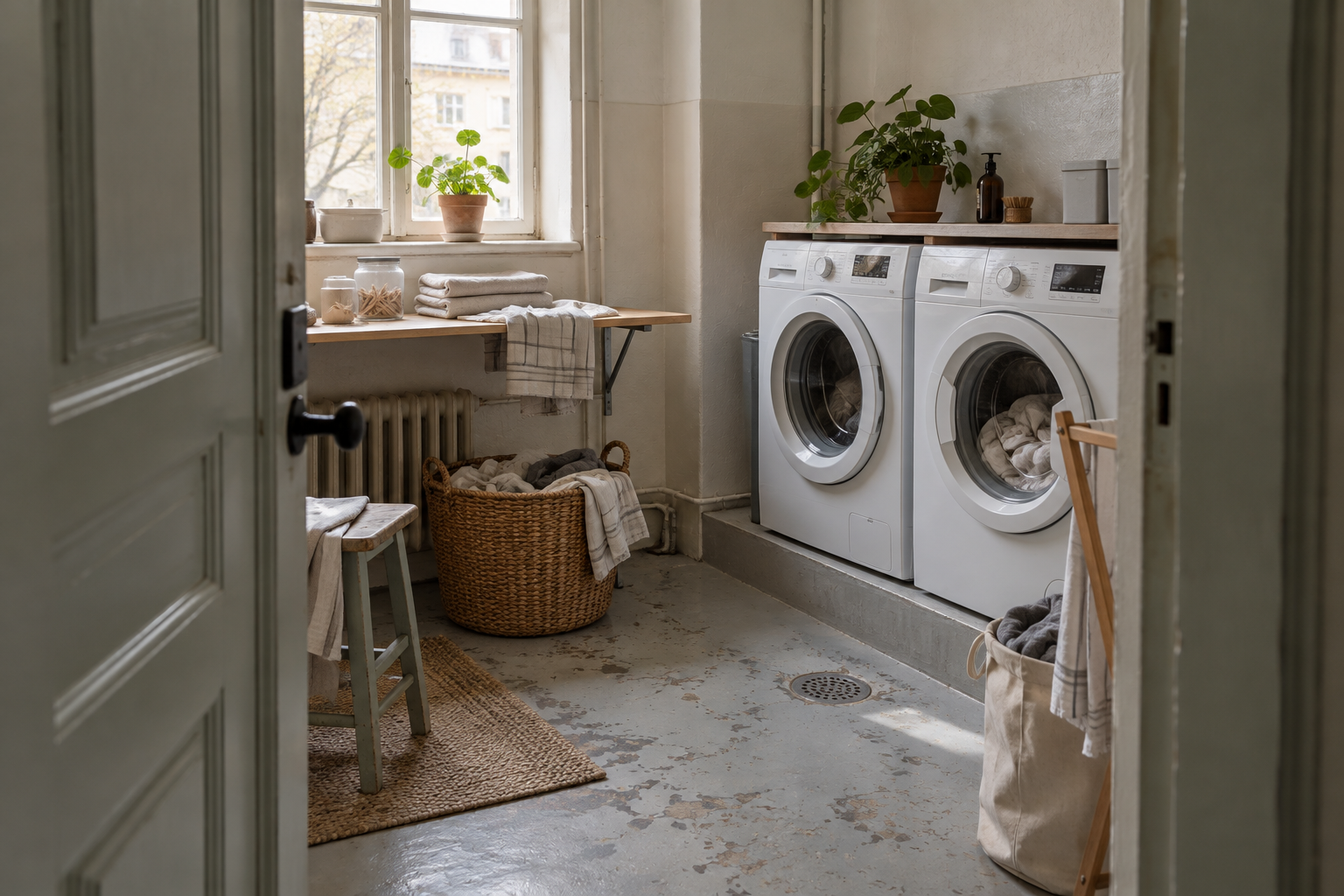
Sometimes the detail you remember from a trip is a washing machine you had to book. Or the bag of empty bottles someone remembered to bring to the supermarket. These things rarely lead an itinerary, but they become interesting when you imagine living somewhere rather than simply visiting. Across Denmark, Norway and Sweden, ordinary errands offer their own introduction to a place. Here are six details worth noticing, with local examples rather than a single rule for the whole region.
1. Laundry can be an appointment
In Swedish apartment life, the shared laundry room, or tvättstuga, can come with a booking system. Stockholms studentbostäder, for example, tells its residents to reserve laundry time digitally, through an app or on a board outside the room. If you are used to doing a wash whenever the basket fills up, putting it in the diary may take a little adjustment. The room is shared, so your plans have to fit around other people’s. Each building has its own arrangements; the useful first step is to read them. Even the most ordinary chore can teach you how a household extends beyond its front door.
2. A name belongs beside the door
A name on a mailbox can feel unexpectedly personal if you are accustomed to seeing only apartment numbers. In Norway, there is a practical reason for it. Posten asks recipients to label mailboxes with the names, or other unique identification, of everyone receiving mail there. It also advises marking the door with a name for certain parcel deliveries. What looks like a small social detail helps someone do their job. We like that change of perspective: before reading a custom as a statement about national character, look at what it makes possible. Sometimes the explanation is simply that your post needs to find you.
3. The shopping trip begins with empty bottles
In Denmark, a trip for groceries can include taking eligible empty bottles and cans back to a deposit machine. Dansk Retursystem explains that machines scan the packaging and calculate the refund; the deposit mark, barcode and condition of the container matter. The Danish word pant is one you may quickly learn. It turns an empty container into something to keep for the next errand, rather than immediately throw away. Deposit systems exist in many other countries too. What may feel unfamiliar is their place in your particular shopping routine: leaving home with a bag of empties before returning with a bag of food.
4. Looking after the neighbourhood can be a group activity
Norway’s dugnad describes voluntary, unpaid work done together for a shared purpose. Visit Norway gives examples ranging from housing associations and sports clubs to trail maintenance and neighbourhood cleanups. It might mean raking, painting or helping prepare a community event. For someone new to a building, the invitation can reveal another layer of living there: you share the work as well as the space. How participation is organised varies. The interesting detail is the activity itself, which gives neighbours a reason to meet while doing something useful. A freshly cared-for courtyard may have a group of residents behind it.
5. A queue may be a number in your hand
Walk into a Swedish service setting and the first thing to look for may be a ticket dispenser. Lonely Planet’s practical guide highlights numbered queues at places such as ticket offices and supermarket deli counters. You can be waiting your turn without standing in a visible line. If you have missed the machine, everyone else may appear to know something you do not. Once you notice the system, the room becomes easier to read. Numbered queues are hardly exclusive to Sweden, but they are a good reminder that familiarity depends on where you come from. What is automatic to one person needs explaining to another.
6. Buying something may involve no conversation at all
On Danish country roads, a small stall can make the journey part of the shopping. VisitDenmark highlights roadside stalls and farm shops selling local produce, including the many found on Samsø. Some rural sellers use an honesty system: you choose an item and pay according to the instructions without an attendant handling the transaction. National Geographic documented one such example at a vineyard on Hjarnø. Payment arrangements differ, so read the sign rather than assuming there will be a cash box or a card terminal. The appeal lies in the small exchange: goods made available, a price stated and the customer trusted to finish the purchase.
The details that help a place make sense
None of these habits defines every Scandinavian household, and several will already be familiar elsewhere. Together, they offer a different way of paying attention. A booking board tells you how a room is shared. A mailbox label helps explain a delivery. A notice about a communal workday shows you something about the people around you. On your next visit, leave room to notice the ordinary systems alongside the architecture and the restaurants. They may be the things that help you picture a life there. for those who notice.
Sources
- Stockholms studentbostäder: laundry booking
- Posten: mailbox placement and labelling
- Posten: delivery in the mailbox and door labels
- Dansk Retursystem: where to return bottles and cans
- Visit Norway: dugnad
- Lonely Planet: practical advice for visiting Sweden
- VisitDenmark: Denmark’s best farm shops
- VisitDenmark: Samsø’s roadside stalls
- National Geographic: everyday life in Denmark’s Coastal Lands
Sources reviewed on 9 October 2026. Practices vary by country, building and business. Image: AI-generated editorial illustration of an imagined shared laundry room.
Continue exploring the countries, places and routines behind our Nordic edit.