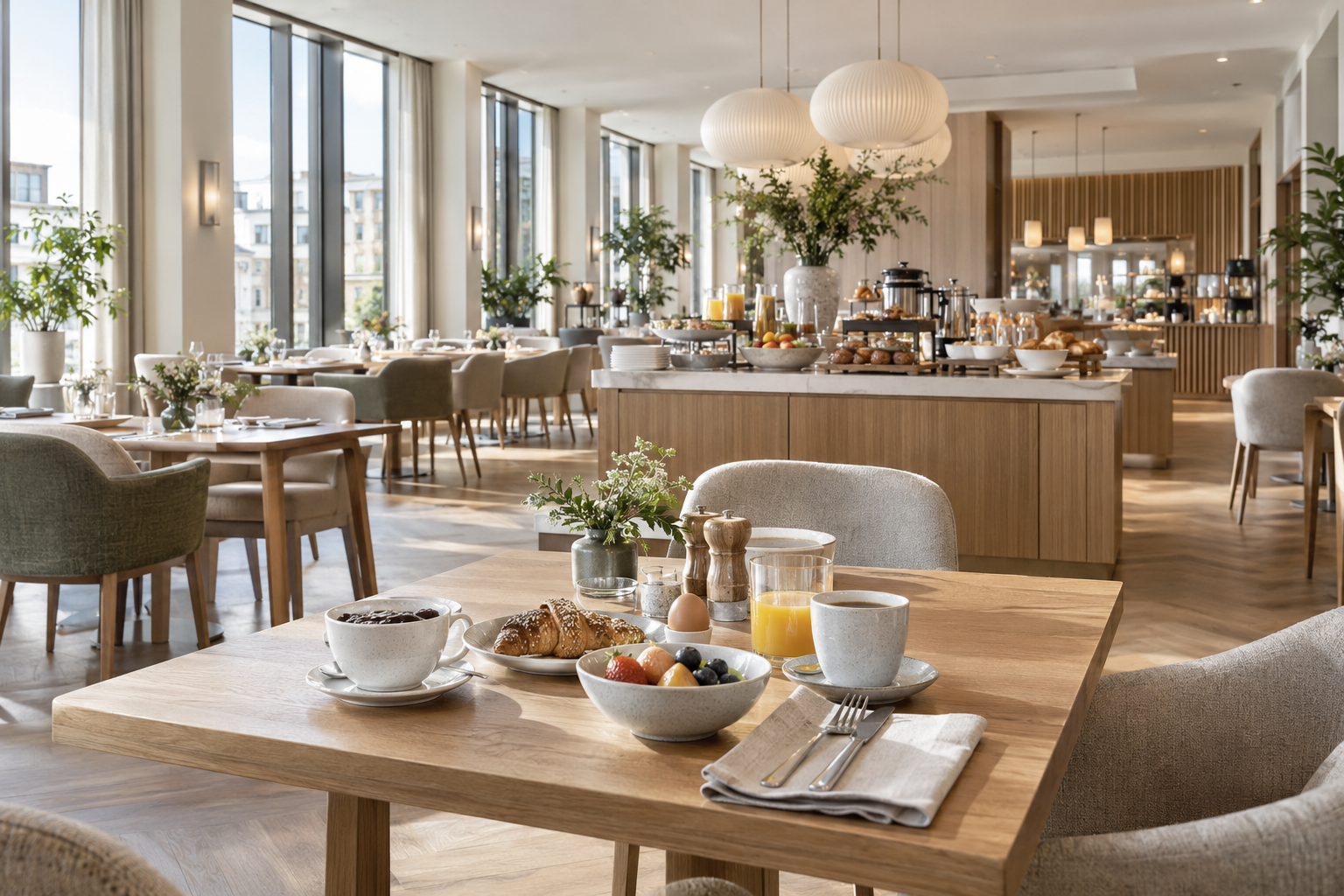
Before the city becomes an itinerary, there is breakfast. A slice of dark bread, the warmth of a coffee cup, a window that makes the weather part of the room. The best hotel mornings are remembered through details that seem almost too ordinary to describe. Across the Nordics, breakfast can offer a particularly intimate introduction to a place: less formal than dinner, more revealing than a lobby, and quietly shaped by what people consider worth doing well.
An everyday meal, given room
There is no single Nordic breakfast, any more than there is one Nordic household. Yet breads, grains, cultured dairy, eggs and coffee form a familiar vocabulary across many morning tables. A hotel gives those everyday foods more space and time. Crispbread beside a soft roll; yoghurt with berries or preserves; a bowl of porridge that feels sufficient without needing to become a performance. The pleasure lies partly in recognition, partly in the small variation that makes a familiar meal feel local. It is also the luxury of having someone else prepare it, leaving the guest free to notice texture, temperature and the view.
It begins with the bread
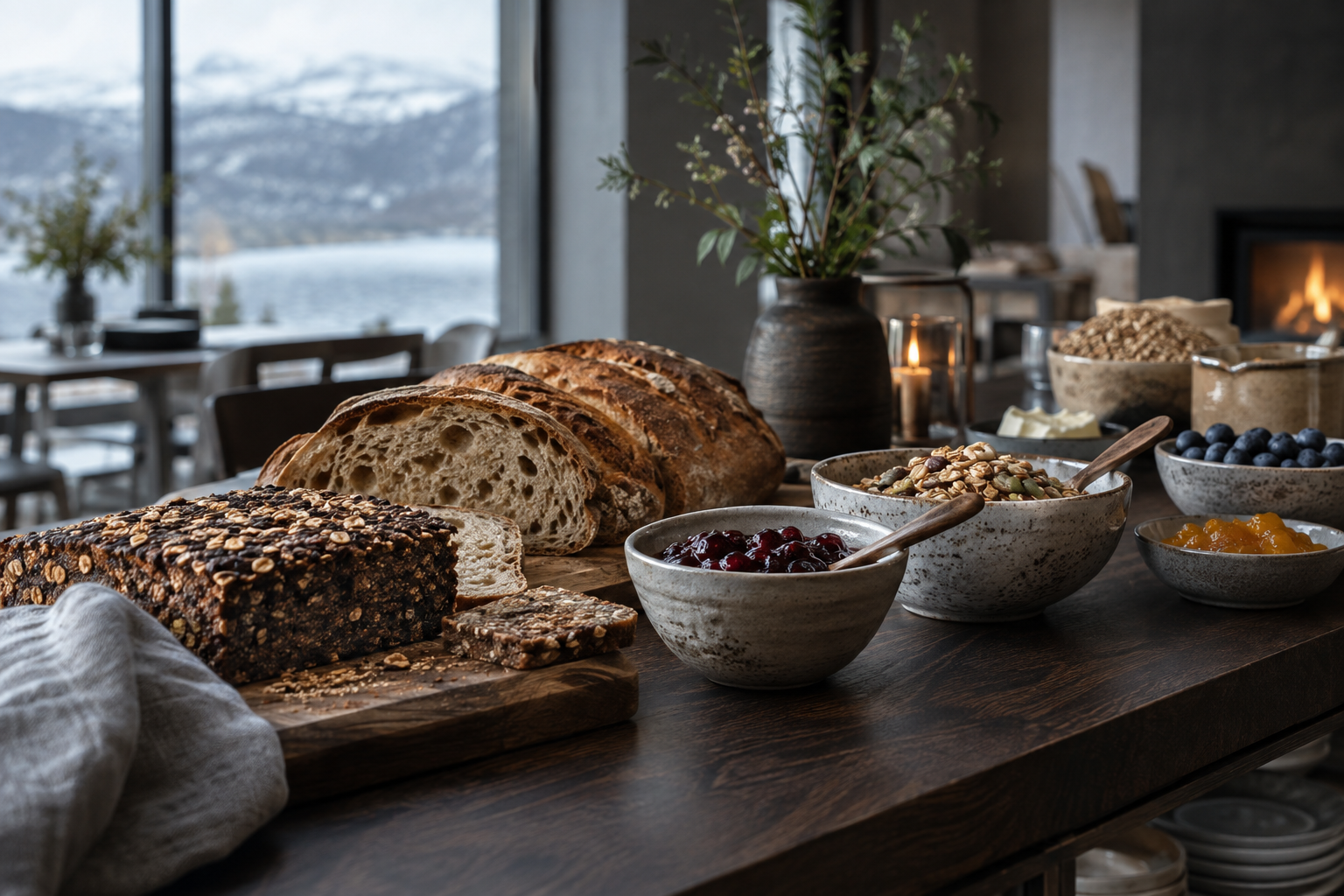
At Hobo Helsinki, head chef Tommi describes bread and pastries as the foundation of the breakfast concept, supported by an in-house baker. The kitchen also makes jams and pickles, serves seasonal variations of vispipuuro, the Finnish whipped semolina porridge, and slow-cooks whole oat grains overnight. These are modest foods with considerable work behind them. A grain can carry character as clearly as an elaborate dish: the chew of an oat, the sour edge of rye, the brittle break of a crust. Hobo’s explanation makes an important point about hotel identity. Making things in-house helps breakfast avoid tasting as though it could have come from anywhere.
A sense of place on the plate
Hotel Kong Arthur in Copenhagen describes its New Nordic breakfast through traditional Nordic grains, seasonal fruit juices and regional ingredients. Nobis Hotel Stockholm takes a similarly explicit approach, presenting a Swedish, organic breakfast built around homemade and home-baked food, with seasonal products preferably from local farmers, growers and producers. These are the hotels’ own accounts of their sourcing, rather than a guarantee that every ingredient comes from nearby. Still, they reveal what each wants breakfast to communicate. The meal becomes a small introduction to the surrounding food culture, delivered through a loaf or a spoonful rather than a long explanation.
Organic is part of a larger decision
Kong Arthur is unusually clear about the choices behind the buffet. Its stated purchasing order favours local organic produce, then local conventional produce, then imported organic produce. The hotel reports holding Denmark’s silver organic food label, covering a 60–90% organic share. That does not make local and organic interchangeable, or prove that the shortest journey always has the lowest environmental impact. It does make the trade-offs visible. Seasonality also asks something of a breakfast menu: an acceptance that the offer may change. A preserve can keep the flavour of a harvest in circulation after its fresh fruit has disappeared from local fields.
Coffee sets the pace
Coffee has a practical job in a hotel, but it also gives the morning its rhythm. The first cup gets things moving; the second can become a reason to remain at the table. Hobo makes coffee part of its description of Finnish breakfast atmosphere. Hotel SKT. Annæ in Copenhagen pairs freshly brewed coffee and freshly baked bread in its breakfast invitation, offering the buffet as a benefit of booking directly. Even that commercial detail is revealing: the morning meal is part of the relationship a hotel wants to build with a guest. The promise is something familiar and reassuring at the start of an unfamiliar day.
The room is an ingredient
Atmosphere does not begin at the edge of the plate. Natural light can make a table feel connected to the street; on darker mornings, considered lighting can give it a sense of shelter. The weight of a ceramic cup, the curve of a bowl and the space between tables all influence how breakfast feels, even when no one identifies the designer. These are ways of reading a room, not claims that every Nordic hotel uses handmade tableware or the same restrained palette. Sommerro in Oslo offers a useful counterpoint to that stereotype. Breakfast in Ekspedisjonshallen sits within the hotel’s historic setting, combining a generous buffet of seasonal local ingredients with a choice of hot dishes. Nordic hospitality can be expressive and abundant, too.
A buffet is also a piece of design
A buffet arranges more than food. It arranges movement: where people pause, whether coffee creates a queue, how easily someone finds a spoon or understands what is in a dish. A smaller serving vessel, a clear label or a little space around the bread can make abundance easier to navigate. The most considered version does not need to look sparse. It needs to feel legible. Nor is the buffet the only possible format, as Sommerro’s combination of self-service and hot dishes suggests. Choice matters most when it gives guests a comfortable way to assemble their own morning, rather than asking them to survey every possible breakfast at once.
What remains after breakfast
The other side of a beautiful buffet is what goes uneaten. Strawberry says most of its hotels weigh and record food waste, and that its breakfast buffets use slightly smaller plates as part of its reduction efforts. Its purchasing policy also requires organic and Fairtrade-certified coffee. These operational choices are less photogenic than a bowl of berries, but they give the sustainability conversation substance. Measuring waste is a practice, not proof that waste has disappeared; organic options do not make an entire meal impact-free. The interesting standard is care that continues behind the scenes, after guests have finished and the table has been cleared.
The morning becomes the memory
A hotel can tell its story through architecture, a signature scent or the people it welcomes into its bar. Breakfast gives that story an everyday test. Does the bread have character? Does the coffee invite another cup? Does the room allow a hurried traveller and a lingering couple to feel equally at ease? There is nothing exclusively Nordic about getting these things right. But the hotels considered here show how regional ingredients, local habits and a distinct atmosphere can make a routine meal feel rooted. Perhaps that is the art of the Nordic hotel breakfast: enough attention has gone into the morning that the guest can simply enjoy it. A small pleasure, for those who notice.
Sources
- Hotel Kong Arthur — New Nordic breakfast and sourcing
- Nobis Hotel Stockholm — Breakfast at NOI
- Hobo Helsinki — Breakfast, with notes from head chef Tommi
- Hotel SKT. Annæ — Breakfast and direct-booking offer
- Sommerro Oslo — Breakfast in Ekspedisjonshallen
- Strawberry — Food sourcing, coffee and food-waste practices
Discover Nordic places through food, atmosphere and the details that make time away feel well spent.