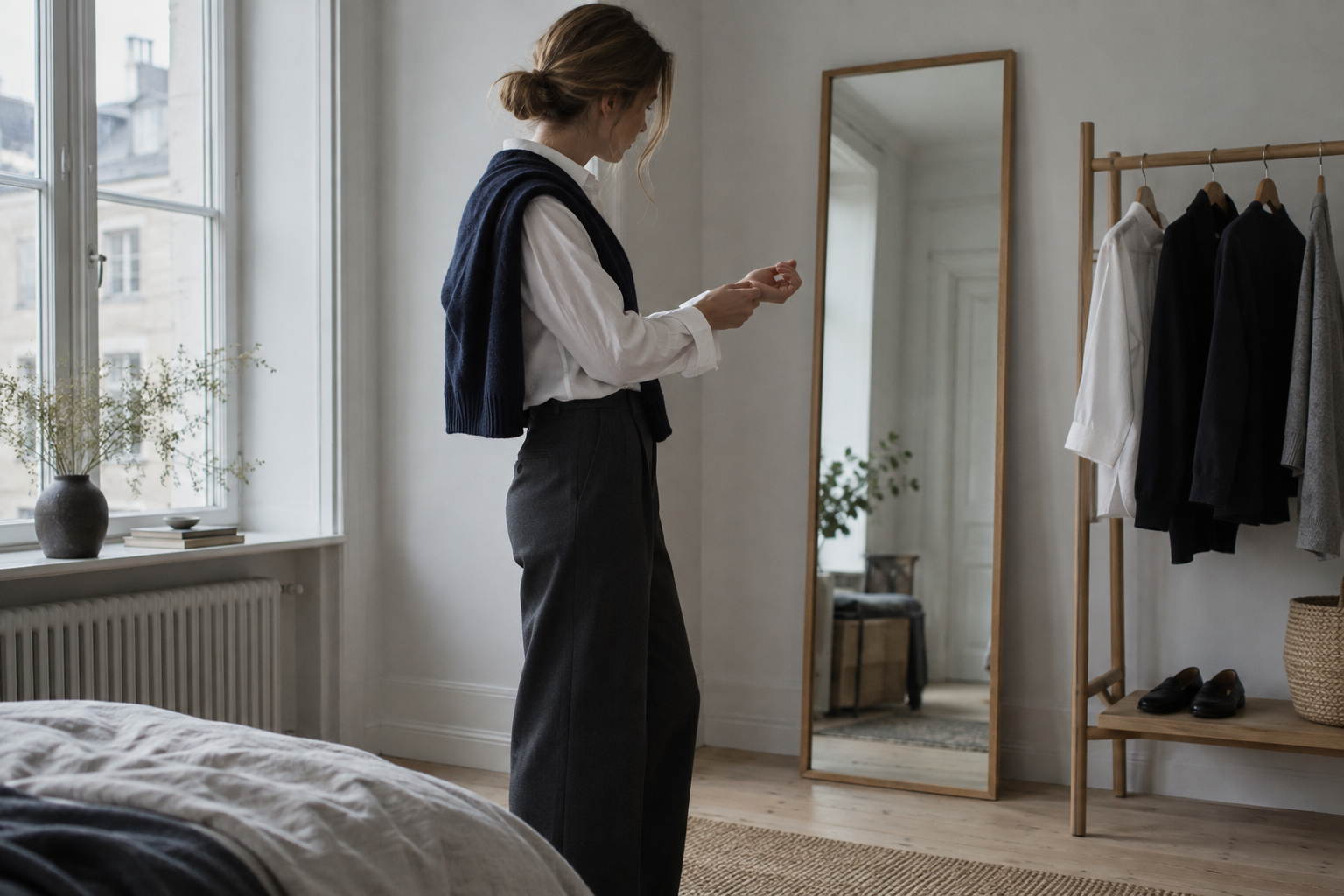
Personal style is often described through discovery: the next silhouette, the next colour, the next thing to try. Yet the clothes that say most about us are usually the ones we return to. Wearing them often is not a lack of imagination. It is how preference becomes visible.
Repetition is how style becomes recognizable
A familiar shirt, a particular trouser shape or the same pair of shoes can become more distinctive through repetition. Style does not always need more variety. Sometimes it needs enough consistency for a point of view to emerge.
Familiar clothes remove unnecessary decisions
There is ease in knowing how something fits, what it works with and how it feels throughout the day. Returning to trusted pieces leaves more room for small changes in proportion, texture and detail without requiring the wardrobe to begin again each morning.
The best wardrobe reflects real life
Clothes earn their place when they suit the days we actually have. The right pieces work with our routines, weather and ways of moving. They may appear ordinary on a rail, but become personal through use.
Care changes the value of clothing
Brushing wool, mending a seam, polishing leather or having a shoe resoled extends more than the life of an object. Care builds familiarity. A well-maintained piece often becomes more appealing as it loses its newness and begins to carry a history.
Wearing something often is the point
A good purchase should not need to be protected from ordinary life. Its value appears in repetition: the meetings, journeys, dinners and unremarkable Tuesdays it moves through with us. Which piece in your wardrobe already feels unmistakably yours?
Considered clothing and accessories chosen for usefulness, character and repeat wear.