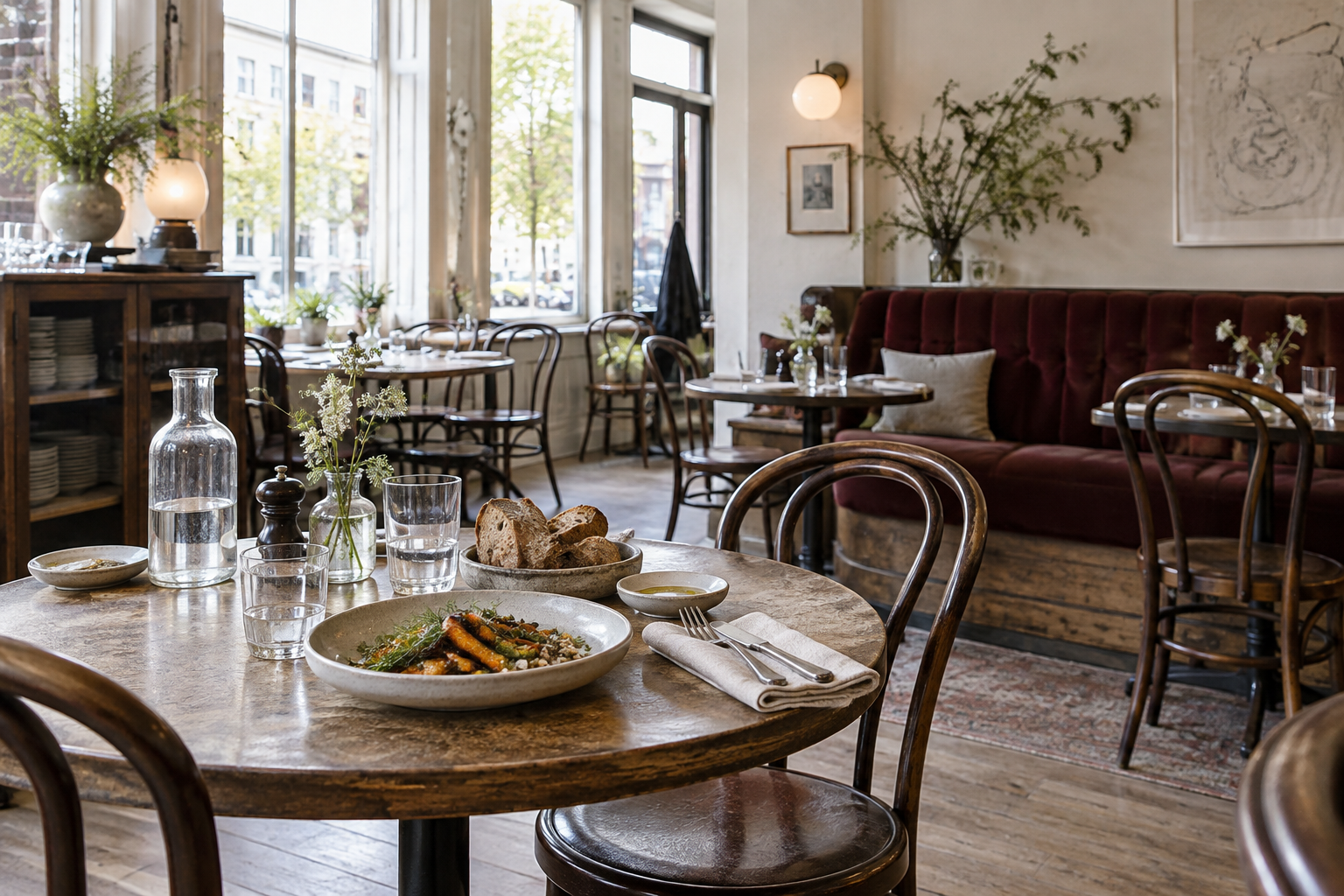
A table by the window. Bread arriving while coats are still being folded over chairs. A menu you can read without losing the thread of the conversation. The appeal of a bistro begins before the first dish reaches the table. It promises a meal with enough character to remember and enough ease to repeat. In a city discovered through reservations, recommendations and saved addresses, that is a quietly persuasive proposition: somewhere you might start calling your place.
A return to something that never quite left
The bistro has hardly disappeared. Its French roots and familiar rituals have long travelled beyond France. What feels timely is the renewed attention to the kind of evening it offers. In its 2026 Paris restaurant guide, Condé Nast Traveller highlights Bistrot des Tournelles and its nostalgic cooking as a sign of renewed interest in traditional French food. Stockholm offers its own variations. The return described here is an editorial reading of current restaurants and coverage, rather than a measured increase in bistros across the Nordics.
Stockholm gives the idea a contemporary accent
Bibon, on Biblioteksgatan, describes itself as a modern European bistro with influences from New York’s eclectic restaurant scene. Its own account puts familiar dishes and an energetic atmosphere at the centre, with lunch, after-work visits and longer dinners all part of the offer. That flexibility makes the format interesting. A restaurant can hold different versions of the same day, allowing a quick meal and a more leisurely evening to share an address. The bistro becomes a useful part of city life as well as somewhere to book for an occasion.
Good cooking can settle into a different rhythm
Krog Agrikultur offers a related example. Visit Stockholm dates the opening under Slussen’s Golden Bridge to October 2025 and describes chef Filip Fastén’s return in a more relaxed, bustling format. The restaurant’s own website emphasises seasonal Swedish ingredients, an open kitchen and a warm social atmosphere. It also lists an à la carte menu. This is not a claim that every such restaurant is a French bistro. It is a sign of shared priorities: careful cooking, recognisable hospitality and a meal that fits comfortably around the people at the table.
The familiar dish earns its place
There is a particular pleasure in ordering something whose outline you already know. Anticipation can begin with the thought of crisp potatoes, a well-made sauce or a dessert you have loved for years. Familiarity gives the kitchen a clear test: texture, temperature, seasoning and timing all have to work. A dish does not need an elaborate explanation to reveal care. Food & Wine’s coverage of Stockholm’s increasingly international dining scene includes Bistro Mirabelle as a French-style address with a Parisian atmosphere and a strong wine list. It is one example of how an established culinary language can feel at home in a Nordic city.
The room is part of the meal
The bistro’s visual vocabulary is easy to recognise: small tables, a banquette, a mirror, glassware catching light. Its real appeal depends on how those things feel in use. Can you sit comfortably through dessert? Can you hear the person opposite you? Does the lighting make the room inviting while leaving the menu readable? A beautiful room earns its atmosphere through these practical details. The ideal has a little movement around it, enough to feel connected to other people without surrendering the conversation at your own table.
Relaxed does not automatically mean inexpensive
A casual room can still come with an ambitious bill. The word bistro tells you something about a restaurant’s intended character, but little on its own about value, portions or how much choice you will have. Look at the current menu rather than relying on the name. For diners who eat vegetarian or plant-based food, that also means checking whether there is a satisfying main course rather than assuming the side dishes will add up to dinner. The most welcoming version of informality makes it easy to understand what your evening can be.
The pleasure of a second visit
A first visit is full of assessment. You learn the menu, the room and how the evening moves. On the second, some of that work disappears. You might know which seat you like or which dish you want again. The restaurant begins to attach itself to ordinary life: a catch-up after work, a birthday that needs little organising, a meal at the end of a long walk. That possibility helps explain the bistro’s appeal. It offers a setting for memories that accumulate gradually, one familiar detail at a time.
A table worth coming back to
Perhaps the most interesting restaurant question is what makes you want to return. A memorable dish matters. So does being able to relax into the room and enjoy the person you came with. The bistro brings these pleasures close together: cooking with a point of view, a recognisable welcome and enough flexibility for an ordinary evening to become a good one. Its return feels like renewed appreciation for hospitality that can become a habit. A place in the city, for those who notice.
Sources
- Bibon · Restaurant concept and menus, Stockholm
- Visit Stockholm · Krog Agrikultur in the 2026 openings guide
- Agrikultur · Seasonal Swedish ingredients, atmosphere and à la carte menu
- Food & Wine · Stockholm’s New Restaurants Are Decidedly More Global
- Condé Nast Traveller · Paris restaurant guide, updated March 2026
On everyday pauses and places that invite you to stay.