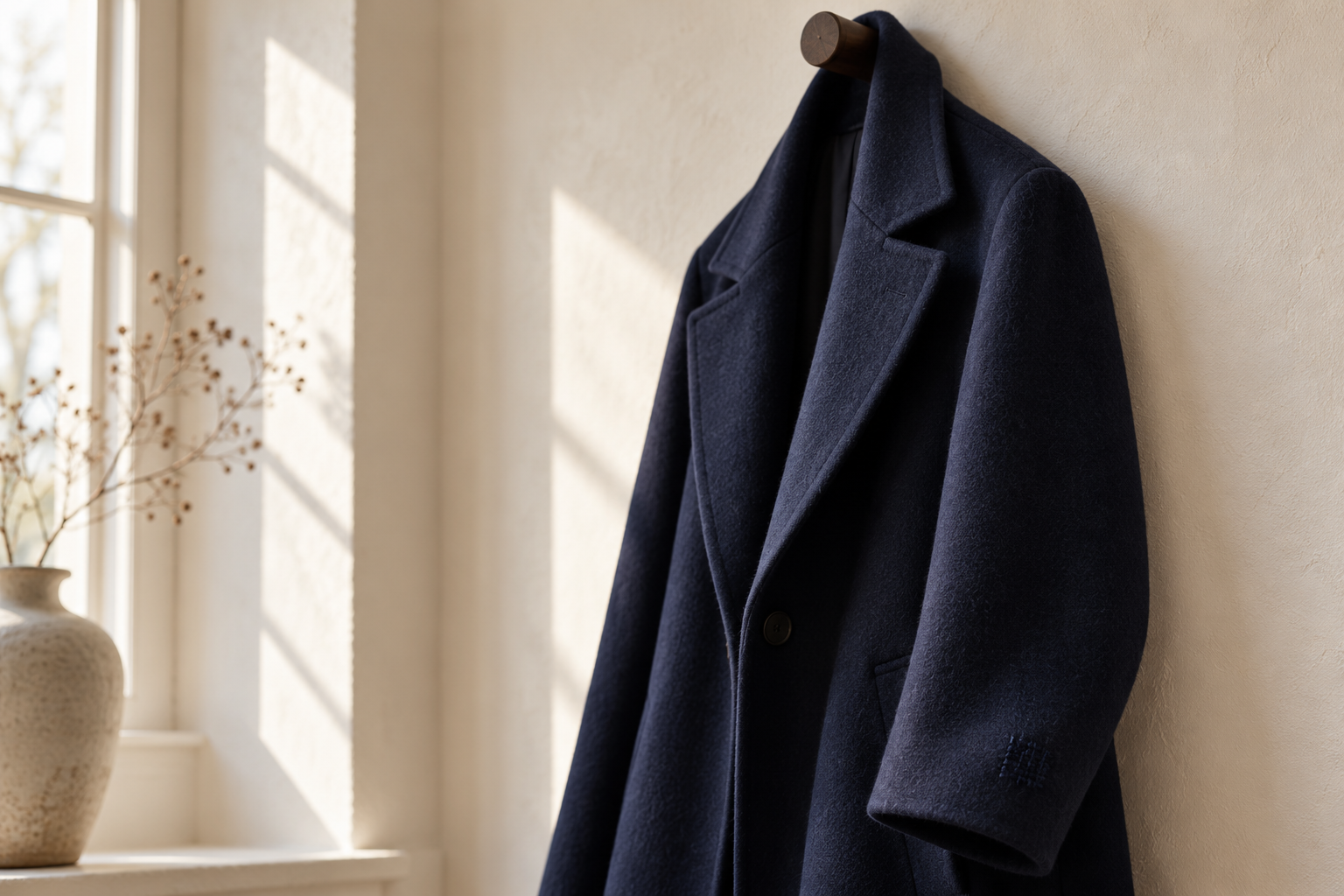
A small hole appears in the sweater you wear most. The shape still works, the wool feels familiar and you know exactly which coat it fits beneath. A repair could be almost invisible. Or it could become a detail you choose: a patch of blue thread on grey wool, a little embroidery at the cuff, a second layer of denim where the first has worn thin. Either way, the garment gets another chance to be part of your day.
The renewed interest in making things last
On 1 October 2026, Vogue Business reported a 90 per cent increase in #SewingTok videos globally over the previous 12 months, citing TikTok. Pinterest data shared with the publication showed searches for “thrift flip ideas” up 610 per cent. These figures describe broader sewing and transformation interests, not a Nordic-only mending trend. They do suggest an audience interested in doing something with clothes beyond buying them.
A repair can have a point of view
Visible mending leaves the intervention in sight. A contrasting thread can draw attention to the work; a tonal patch can sit more softly against the original fabric. For our edit, the appeal is the choice involved. You decide how this particular piece will look as it continues to be used. That does not require every repair to become a decorative project. A discreet mend belongs in the same wardrobe as an expressive one. The useful question is whether the result makes you want to put the garment on again.
A Danish example, one small stitch at a time
Danish clothing brand DILLING makes the idea tangible through its repair guides. Alongside patches and invisible mending, it offers instructions for covering holes with embroidery, including flowers, clouds and other small motifs. There are also guides for duplicate stitch and woven repairs. The range is a reminder that wool showing wear can still have possibilities. A repair may blend into the knit or add a playful mark. Rather than treating all damage alike, the guides offer different approaches for different results. We would start by finding the method that suits the actual garment.
Jeans that go back to the workshop
Swedish brand Nudie Jeans offers another model: bring its jeans back for repair at a Nudie Jeans Repair Shop. Its published policy includes jeans bought elsewhere, and the brand also provides a repair manual for people interested in the process. Check the current shop arrangements and membership terms before making a visit. This is repair as a service, which matters if sewing is not something you enjoy or feel able to do. Keeping a pair in use can involve somebody else’s skill. The creases, fading and fit you have already acquired are reasons to consider the repair.
Usefulness still comes first
Fjällräven’s care and repair guidance adds a practical Swedish outdoor perspective: a jacket, shirt or pair of trousers can be fixed for further use. That is a useful test for any proposed intervention. Will the fabric still move comfortably? Will the repaired area hold up where it is needed? A decorative stitch alone is not automatically the right answer to a structural problem. For technical clothing, follow the manufacturer’s guidance; for a complicated or treasured piece, ask a repair specialist. A successful result needs to work on the body as well as look good in a photograph.
Begin with the piece you keep setting aside
Most of us can think of something waiting for attention: a cardigan missing a button, a hem that has come loose, a favourite pair of jeans with a thinning knee. Choose one piece you genuinely want to wear. Look at the damage, consider the fabric and decide whether to learn a suitable technique or take it to someone with experience. If you are trying a method for the first time, practise on a scrap. There is no need to assemble an entire craft cupboard before understanding the job. The clothes can tell you what you need.
Personal style includes what happens afterwards
Mending belongs to many cultures and long histories of making resources last. These Nordic examples are contemporary ways into that larger practice. For Nordic Way My Way, the interesting shift is in where we look for style: the colour of a repair, the choice to keep a familiar silhouette, the care given to something already owned. A wardrobe becomes personal through use as well as selection. The small blue patch at an elbow can become another reason you recognise a sweater as yours. And the best outcome is ordinary: it comes out of the drawer and gets worn again. for those who notice.
Sources
- Vogue Business: Customers Are Crafting More. Should Brands Get Involved? (1 October 2026)
- DILLING: repair guides, embroidery and visible mending
- Nudie Jeans: free repairs in store
- Nudie Jeans: repair manual
- Fjällräven: how to repair your gear
Sources reviewed on 9 October 2026. Trend figures refer to global platform activity, not specifically Nordic repair habits. Check current brand repair terms before visiting. Image: AI-generated editorial illustration of an imagined garment; it does not depict a product from the brands mentioned.
Explore our style edit through useful pieces, personal details and everyday wear.