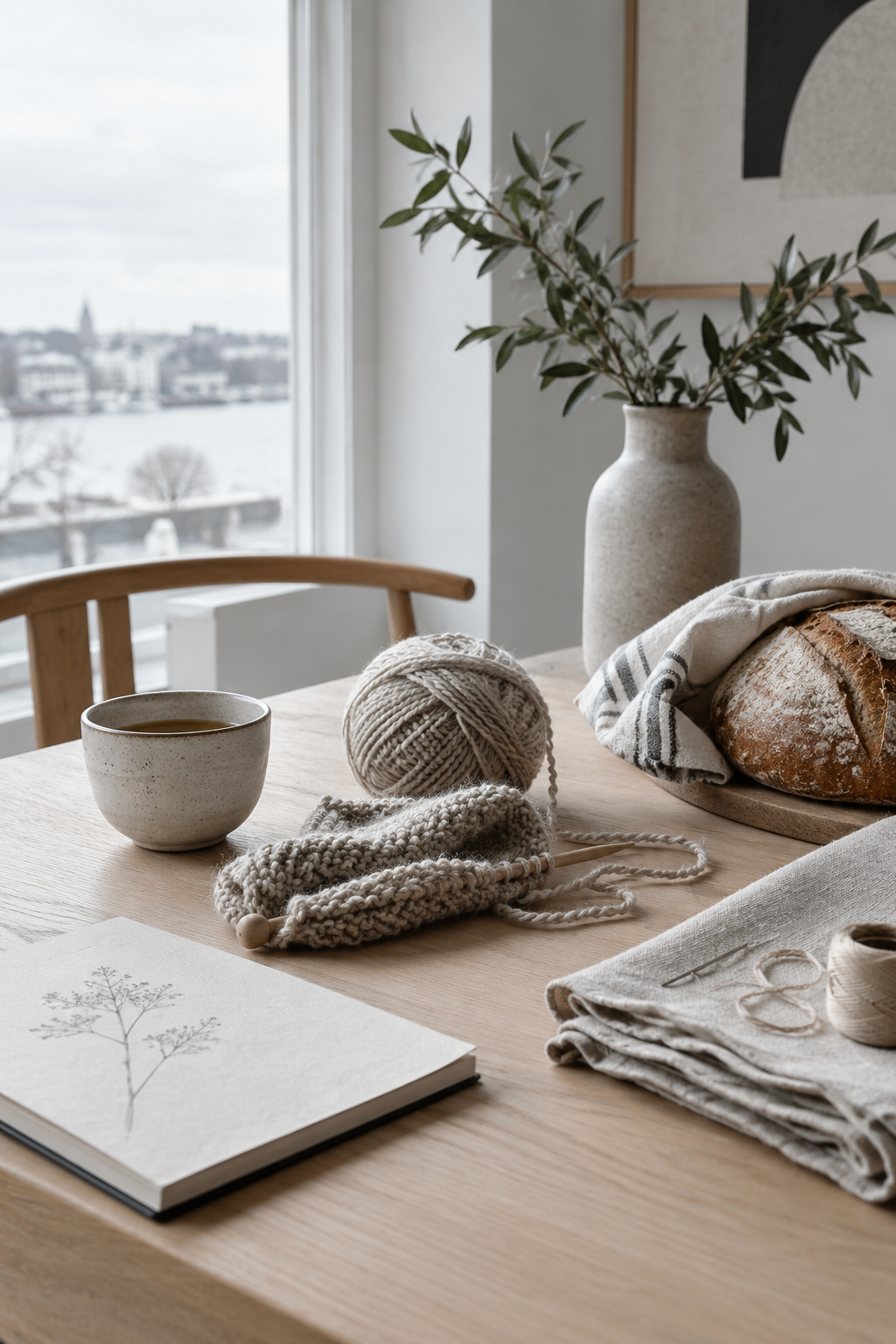
Somewhere between the ceramics studio, the sourdough starter and the knitting project carried in a tote bag, hobbies once treated as old-fashioned have become oddly current again. The surprise is not that Nordic people are making things by hand. They never really stopped. The interesting part is that these slower, tactile practices now feel desirable to a generation fluent in screens, speed and constant polish.
The old skills were never gone
In Sweden, Hemslöjden has worked for more than a century to keep slöjd and handcraft visible as a living culture, not a museum piece. Its language is telling: craft is something people do together, through associations, calendars, courses and shared knowledge. Across the Nordics, knitting, sewing, woodwork, wool, ceramics and baking belong to family memory as much as design culture. What is changing is not the existence of these practices, but their new social temperature.
Screen fatigue needs something physical
A phone can fill every empty minute, which is exactly why the empty minute has become valuable. Recent coverage of young people taking up knitting, crochet, embroidery and sewing often returns to the same impulse: less doomscrolling, more hands. The activity does not need to be dramatic. Counting stitches, kneading dough or shaping clay offers a kind of attention that cannot be swiped away.
Grandma is not the insult anymore
Calling these hobbies "grandma" used to make them sound domestic, slow or unfashionable. Now that slowness is part of the appeal. Younger people are not necessarily trying to recreate their grandparents' lives. They are borrowing skills that carry memory, patience and use. A knitted scarf, a repaired hem or a handmade bowl does not compete with the glossy image. It refuses the idea that everything worth having should arrive finished.
The social side matters
The return to handmaking is not only private. Knitting circles, sewing classes, ceramics studios, sourdough workshops and local craft calendars turn solitary skills into small communities. This matters in a culture where so much social life is mediated by screens. The object may be the reason people arrive, but the rhythm of making together is often what keeps them coming back.
Imperfection has become desirable
Nordic design has long valued material honesty, function and restraint. Recent design culture still celebrates that, but it is making more space for the visible hand. At Copenhagen's 3 Days of Design in 2025, craft, heritage and material storytelling sat beside polished brand presentations, from Royal Copenhagen's porcelain painting demonstrations to exhibitions centred on clay and tactility. The handmade object feels newly relevant because it carries evidence of time. It does not have to look accidental to feel alive.
Maybe offline is the new status
These hobbies are not a rejection of modern life. They are a correction inside it. To knit, sew, bake, garden or shape clay is to spend time in a way that produces something tangible but not always efficient. That may be why the return feels bigger than nostalgia. In a highly digital life, making something slowly becomes a small act of control. Not control over the image, but over attention, patience and the part of the day that still belongs to the body.
Objects and rituals chosen for slower evenings, tactile hobbies and time away from screens.