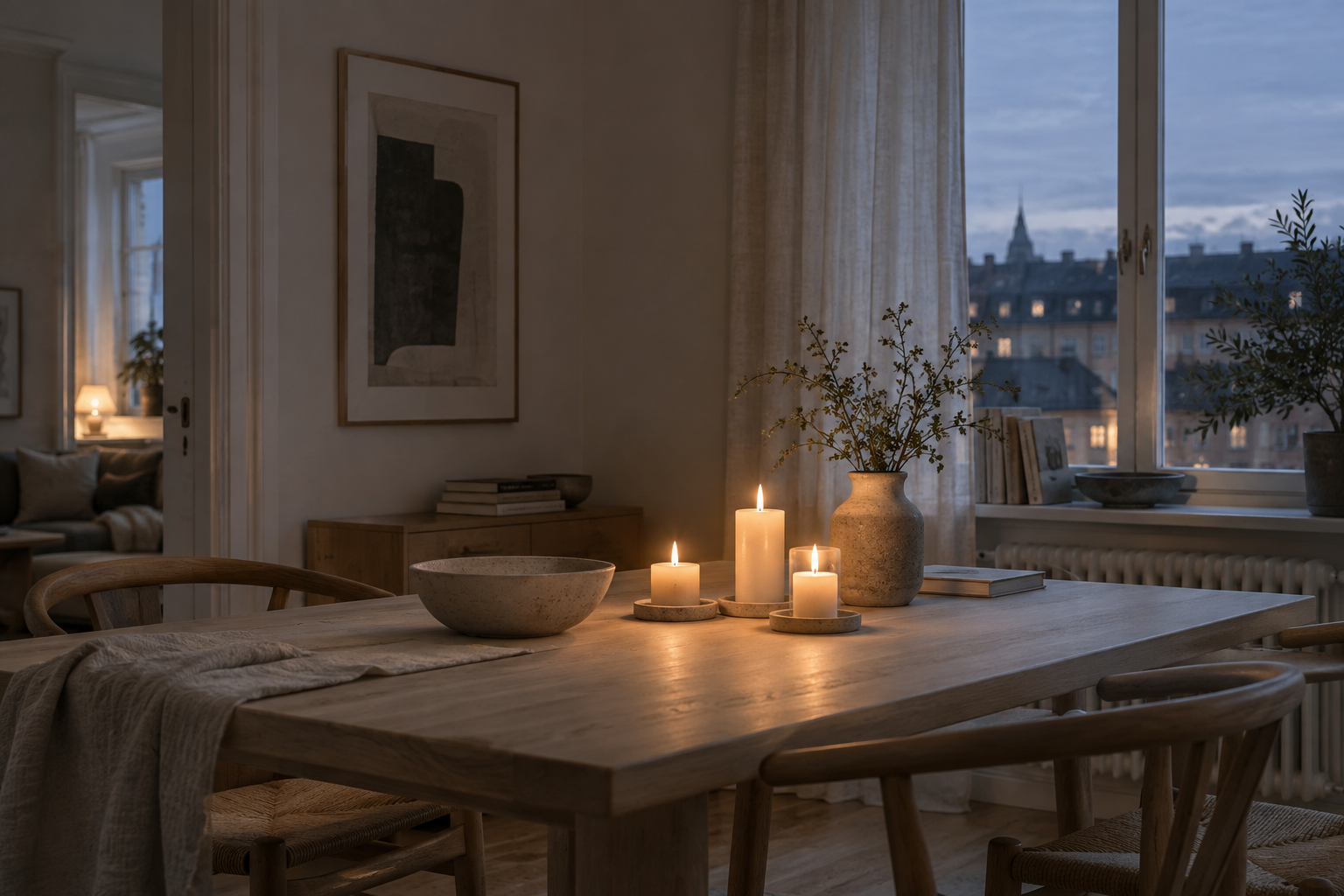
Across the Nordic countries, candlelight is rarely reserved for special occasions. It appears at breakfast tables, beside evening coffee and in windows as the daylight fades. More than decoration, it is a small way of changing how a room feels and how people inhabit it.
Darkness changes the relationship with light
When winter days become shorter, light feels less like a background condition and more like part of daily life. A candle does not try to replace daylight. Its smaller glow acknowledges the season and makes the room feel closer, warmer and more present.
Candlelight belongs to ordinary days
Part of its appeal is how little ceremony it requires. A candle can be lit for dinner, while reading or during a conversation at the kitchen table. The moment does not need to be important first. The light helps make it feel considered.
Atmosphere is made in layers
Nordic interiors often rely on several modest sources of light rather than one bright fixture. Lamps create useful pools of illumination, while candles add movement and depth. Together they soften the edges of a room without making it feel staged.
Scent should leave room for the room
A candle does not need a powerful fragrance to have presence. Unscented wax can be enough. When scent is included, restrained notes of wood, herbs, resin or sea air can complement natural materials without taking over the space.
Lighting one changes the pace
The act itself takes only a few seconds, yet it can mark a transition from work to dinner or from a busy day to a slower evening. Perhaps that is why candlelight endures. Do you light a candle to decorate the room, or because the room feels different once you do?
Considered objects and everyday details shaped by warmth, function and atmosphere.