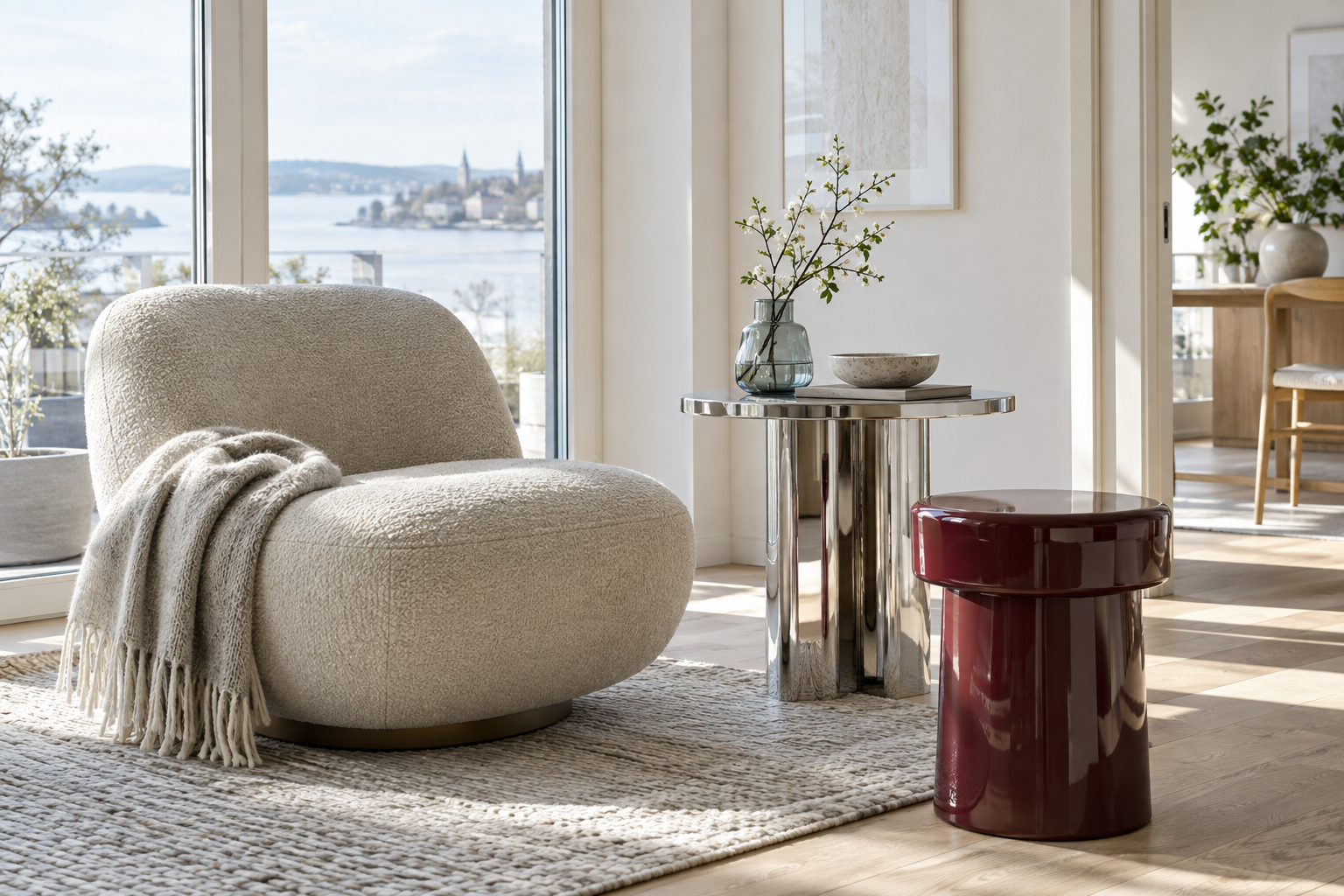
Picture a room with an oak floor, a wool chair and daylight falling across a pale wall. Now add a polished metal table. The furniture has barely changed, yet the room feels different. Light has somewhere new to land. A familiar palette gains a sharper note. That small shift is the interesting part of the shinier interiors story: reflection can bring energy to a quiet space without asking it to become a louder one.
A little gloss changes the conversation
Scandinavian interiors are often pictured through soft, light-absorbing materials: linen, unfinished-looking wood, chalky walls and textured upholstery. It is an appealing image, but a narrow one. Gloss introduces another way to experience those same rooms. A curved metal surface picks up a window. A lacquered table holds a bright line along its edge. Your eye moves between the object and what it reflects. Our reading of recent design releases is that this contrast feels newly compelling. It is a direction visible in collections and showrooms, rather than evidence that every Scandinavian home is being redecorated.
The September detail worth noticing
New Works offers a particularly timely example. On 15 September 2026, ScandinavianDesign.com featured the lacquered Atlas Stool collection by Stockholm-based designer John Astbury. The range pairs substantial, simple forms with high-gloss finishes in Espresso, Burgundy and Crème. The original four-legged shape is joined by a rounded version with three legs. These are small pieces with a strong presence: the finish lets a familiar geometry catch light differently. On its own product page, New Works suggests placing the glossy stool alongside soft, raw and matte textures. The appeal comes from the relationship between surfaces as much as the object itself.
Metal already belongs in the story
Steel has a long place in Scandinavian furniture. Fritz Hansen’s 2026 celebration of the PK22 lounge chair and PK61 coffee table marks seventy years since their 1956 debut. The anniversary pairs the chair’s steel frame with Haze leather and gives the table a grey-white granite top. It is a useful reminder that the region’s design history contains plenty beyond pale timber. The current interest in reflective details can be read as renewed attention to an existing vocabulary, with contemporary rooms finding fresh ways to combine it.
The softer side of a hard material
There are contemporary examples too. Reporting from Copenhagen’s 2026 3daysofdesign festival, Veranda highlighted Frama’s Petit Rond chair and stool, where zebra-patterned upholstery met a slim stainless-steel frame. That combination is more expressive than the neutral Scandinavian room of the popular imagination. It also makes a straightforward design point: a cool metal structure can sit comfortably beside something tactile and characterful. The contrast gives both materials more to do.
Shiny is not a single finish
Chrome, polished stainless steel and high-gloss lacquer can all bring reflection into a room, but they create different effects. Chrome is a surface finish; stainless steel is a material that can be finished in different ways. Brushed metal tends to diffuse reflections, while a highly polished surface produces a more mirror-like effect. Lacquer brings colour into the equation. A deep red glossy surface catches light very differently from the same colour in a flat finish. If the room already contains plenty of warm wood, a silver-toned detail can introduce a crisp pause. If it needs depth, coloured gloss offers another route.
One reflective note may be enough
Start with the room you already have. A metal tray on a timber table, a glossy secondhand lamp beside a fabric shade, or a small reflective table next to a soft chair can change the balance. You do not need a matching collection. Look at the piece in daylight and again with the evening lamps on: what it reflects will become part of how it looks. A bright surface opposite a cluttered shelf may amplify the clutter as readily as it catches a beautiful window. Placement matters as much as finish.
A surface you can live with
The pleasure of shine should survive ordinary use. Consider whether fingerprints will bother you, how the finish should be cleaned and what happens when an object is dragged across it. Follow the maker’s care instructions, particularly for coatings and lacquer. A surface chosen only for its perfect first photograph may become frustrating in daily life. A better choice is one you enjoy touching, using and seeing in different light. Existing or secondhand pieces can offer that pleasure just as convincingly as a new release.
A room that catches your attention
The most persuasive version of this direction keeps the warmth and adds a little reflection. Wood still carries grain. Fabric still softens the room. A glossy curve or a silver edge makes those qualities easier to notice by giving them something different to sit beside. Scandinavian interiors have room for this kind of tension: calm, with a glint of something unexpected. Sometimes the detail that changes a room is simply the one that catches the light. for those who notice.
Sources
A longer view of the objects we choose to live with.