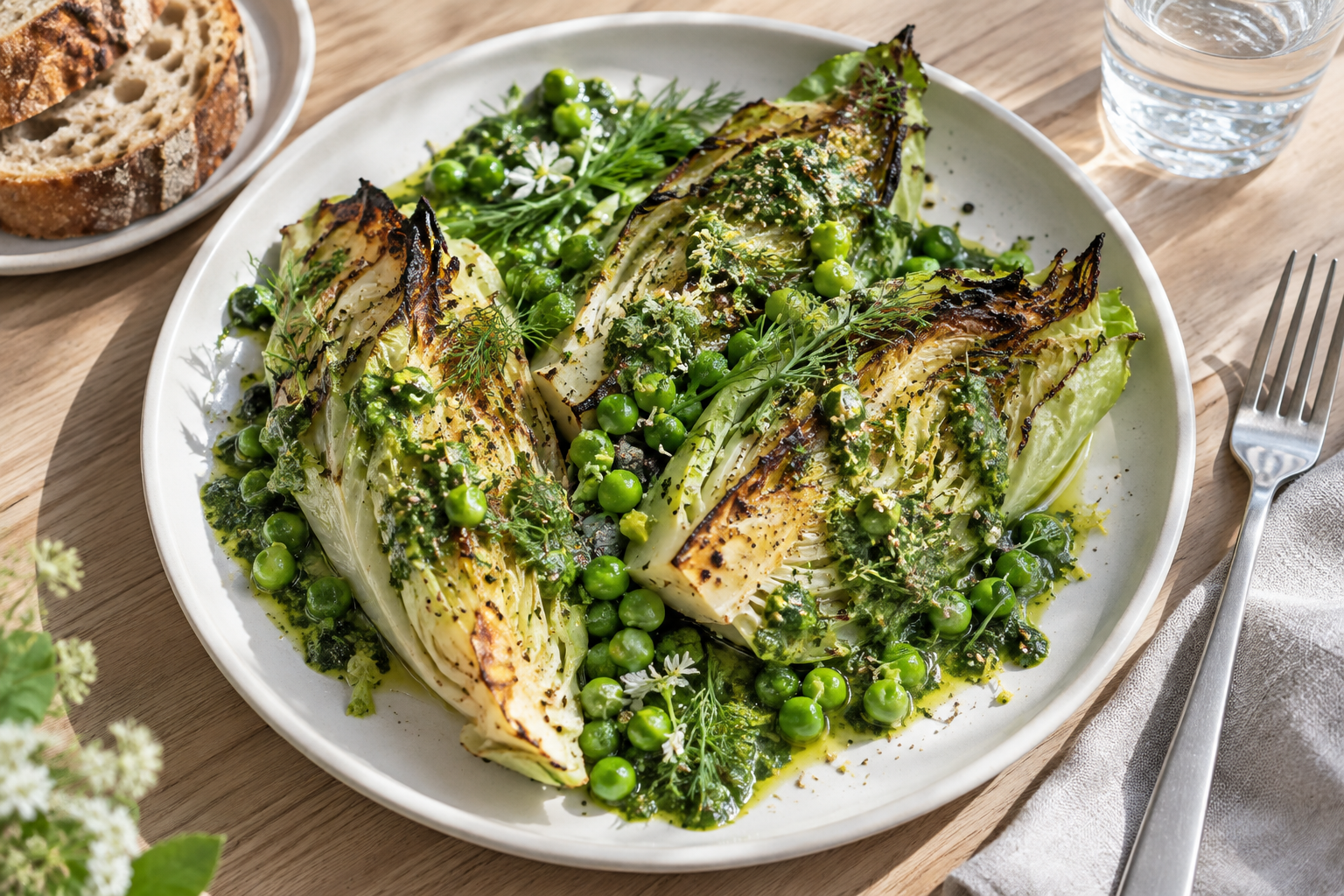
A meal in a Nordic city can begin with excellent local vegetables and end somewhere entirely unexpected. The ingredients may come from nearby; the ideas may have travelled much further. That combination makes the question of what follows New Nordic Food interesting. There is no agreed successor waiting to take its place. Instead, recent examples suggest a food culture becoming more comfortable with several identities at once.
First, remember what the manifesto actually said
The New Nordic Kitchen manifesto was formulated in 2004. Its ten points connected cooking to the region’s seasons, landscapes, producers and food traditions, alongside concerns about health and ethical production. Yet it also explicitly welcomed influences from abroad. That detail complicates the familiar story of a closed Nordic pantry finally opening its doors. Looking outward was already part of the ambition. What comes next can therefore be understood as a different balance within the original ideas, as well as a response to the restrictive image that sometimes grew around them.
When a movement becomes cultural history
In 2025, Norway’s National Museum presented New Nordic. Cuisine, Aesthetics and Place, tracing the movement’s connections with architecture, photography, craft and design. Tableware and restaurant objects appeared alongside artworks and architectural material. The exhibition made visible how far the idea had travelled beyond the plate. The timber, ceramics and landscape-conscious rooms became part of its identity too. For diners today, that raises an interesting question: are we looking for a particular way of cooking, or a familiar image of what Nordic food should look like? The two do not always tell us the same thing.
Copenhagen makes room for several traditions
The 2026 Michelin Bib Gourmand announcements offer a useful snapshot. Newly recognised restaurants included Copenhagen’s Botschaft, serving German and Austrian cooking; Graziano, centred on Tuscan family recipes; and Levi, bringing Japanese and Italian dishes into the same restaurant. These are new awards, not necessarily new openings. Nor does one guide measure an entire food culture. Even so, the range is striking: restaurants can contribute to Copenhagen’s culinary identity through traditions with roots elsewhere. There is room for that identity to describe the people cooking in a city as well as the ingredients growing around it.
Stockholm’s confidence looks outward
Writing in Food & Wine in April 2025, Simon Bajada described a Stockholm restaurant scene embracing international influences while retaining close attention to produce. His examples ranged from Roman-style pizza at 800 Grader to the internationally informed cooking at Ett Hem. The point is not that local sourcing has disappeared. Our reading is that chefs have more than one way to express a relationship with place. A city’s food can reflect its suppliers, its residents and the experiences they bring home.
The next chapter includes the format
What changes may be the way a meal fits into an evening. Michelin’s 2026 Bib Gourmand recognition of Vyn Food & Wine Bar in Simrishamn illustrates another possibility: a more casual setting using the same ingredients as its fine-dining sister restaurant, presented differently. That does not make every such meal inexpensive, and it does not make tasting menus obsolete. It suggests that the knowledge behind ambitious cooking can take several forms. For the guest, the format should suit the occasion, appetite and budget.
The bigger challenge is beyond restaurants
A 2025 Nordic Council of Ministers publication, drawing together the Nordic Food Innovation Summit’s discussions, identifies a more demanding next step: making the movement benefit a wider public. It acknowledges that success in restaurant kitchens has not reached all parts of society equally. The report calls for stronger cooking knowledge, opportunities to eat well and support for small producers facing practical barriers in distribution and profitability. This shifts the conversation from the next celebrated dish to everyday access. Can the values associated with Nordic food become easier to use on an ordinary Tuesday?
Keep the care, ask more of the label
A local ingredient tells you something useful about origin. It cannot, on its own, explain the whole meal: how the food was produced, how a kitchen uses its resources, how people work or who can afford to eat there. These are worthwhile questions to carry into the next chapter. So is pleasure. Vegetables should be satisfying to eat, bread worth finishing, and unfamiliar flavours introduced with care. A food culture becomes more generous when curiosity extends to the person at the table as well as the story behind the ingredient.
Perhaps there is no single “after”
The most convincing answer is a broader Nordic food culture, with room for regional traditions, international influences, ambitious restaurants and everyday cooking. The examples here suggest a direction; they do not establish a uniform shift across every Nordic country. What feels promising is the possibility of keeping the attentiveness while allowing more people to shape the result. A meal can know where it comes from and still be curious about the world. That is a next chapter worth tasting. for those who notice.
Sources
- Nordic Council of Ministers · The New Nordic Food Manifesto, 2004
- National Museum of Norway · New Nordic: Cuisine, Aesthetics and Place, May 2025
- MICHELIN Guide · Nine new Nordic Bib Gourmands, 1 June 2026
- Food & Wine · Simon Bajada on Stockholm’s global food scene, 25 April 2025
- Nordic Council of Ministers · Nordic Food Innovation Summit: ambitions, 2025
On familiar food and the pleasure of a table worth returning to.